Views: 21 Author: Site Editor Publish Time: 2026-05-04 Origin: Site
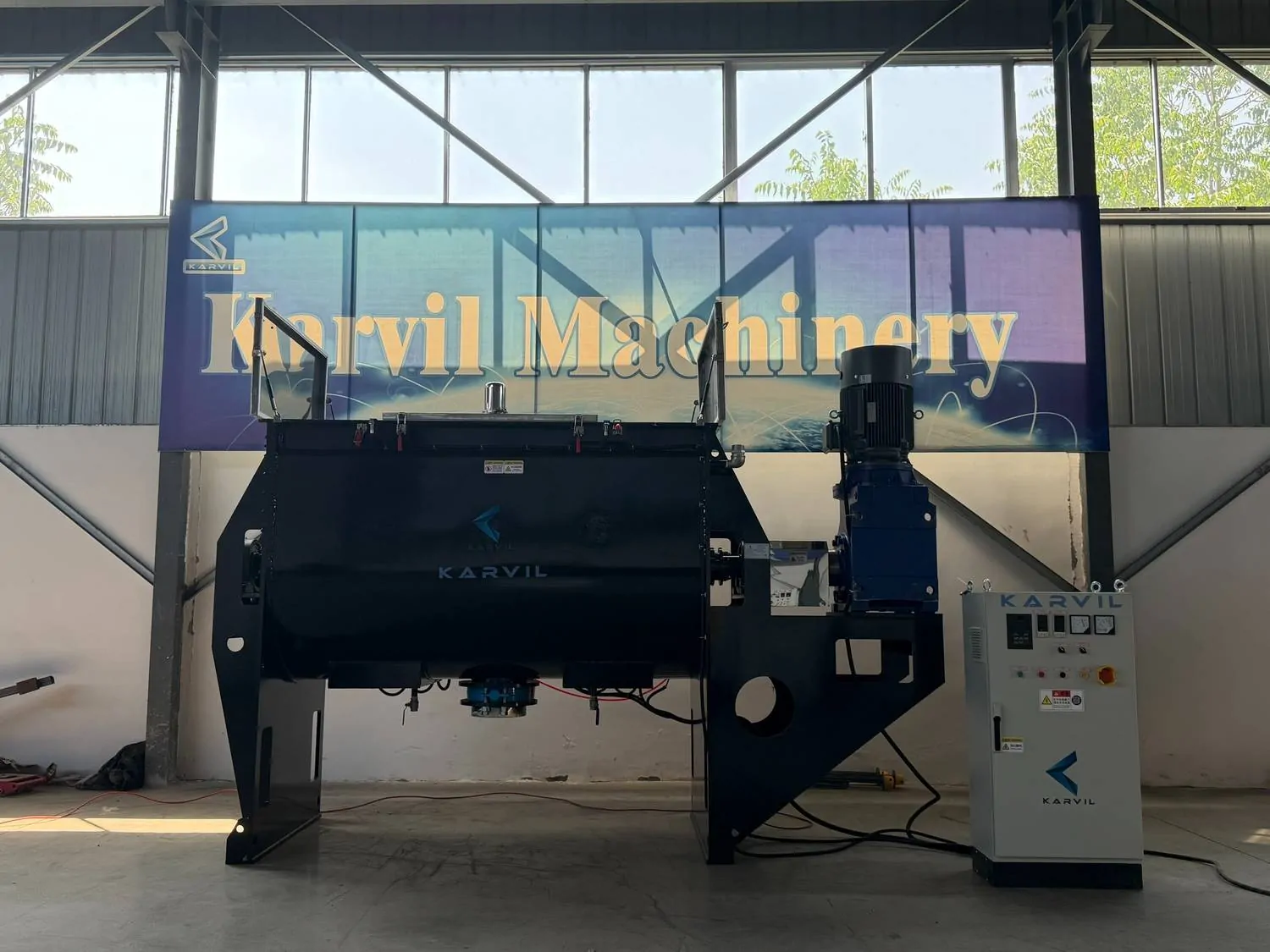
Recently, our manufacturing facility successfully completed and tested a customized 2000L Horizontal Ribbon Blender. This equipment was specifically engineered and manufactured for an Australian customer processing a unique mixture of agricultural grains and wax powders.
Mixing wax-based materials with dry grains requires precise temperature control and gentle agitation. If the temperature is too low, the wax powder may clump; if the agitation is too harsh, the grains might be damaged. To meet the client's specific process requirements, our engineering team configured this mixer with a customized heating system and variable speed control.
Here is a breakdown of how we built this machine to solve the customer's production needs:
The core requirement for mixing wax powder is maintaining proper material flow. We designed an electric heating jacket around the U-shaped mixing tank. Using thermal oil (or pure water) as the heating medium, the system safely and evenly heats the internal materials to a constant 40℃. This prevents moisture buildup and keeps the wax powder flowing perfectly during the blending cycle.
To handle the 1200L effective working volume without damaging the grains, the blender is driven by a reliable 22 kW Siemens Beide motor. It is integrated with a Variable Frequency Drive (VFD), allowing the operator to adjust the agitator speed precisely between 0 to 27 r/min. This flexibility ensures the mixture receives exactly the right amount of shear.
Since the machine processes materials that can be slightly sticky when heated, all material-contacting parts were manufactured using Stainless Steel 304. We applied a high-quality mirror polish to the interior, which minimizes material residue and makes batch-to-batch cleaning much easier.
To balance durability and cost-efficiency, the exterior features a clean brushed (wire-drawing) finish, while the main support frame and non-contact parts are made of heavy-duty carbon steel with an anti-corrosion painted finish.
Powder leakage is a common issue in standard mixers. For this project, we equipped the main shaft with a combination stuffing box seal using PTFE (Teflon) packing. This design provides an excellent seal against fine wax powders and is very easy for the maintenance team to replace when necessary.
For the discharge process, a DN200 Pneumatic Butterfly Valve is installed at the bottom center. Controlled pneumatically, it allows for fast, clean, and safe material discharge into the client's downstream packaging line.
Model: Horizontal Ribbon Blender (Jacketed)
Volume: 2000L Total / 1200L Effective
Drive Unit: 22 kW Siemens Beide Motor (0 - 27 r/min, VFD)
Material: SS304 contact parts (Inner mirror polished) / Carbon steel frame
Heating: Electric jacket for thermal oil/water (Target: 40℃)
Sealing & Valve: PTFE stuffing box seal + DN200 Pneumatic Butterfly Valve
The equipment has passed our strict factory running tests and is currently being packaged for ocean freight to Australia.
Are you processing temperature-sensitive powders or granular materials?
Whether you need jacketed heating, specific material finishes, or custom discharge solutions, we can engineer a mixing system to fit your facility. Contact our team today


