Views: 71 Author: Site Editor Publish Time: 2024-06-14 Origin: Site
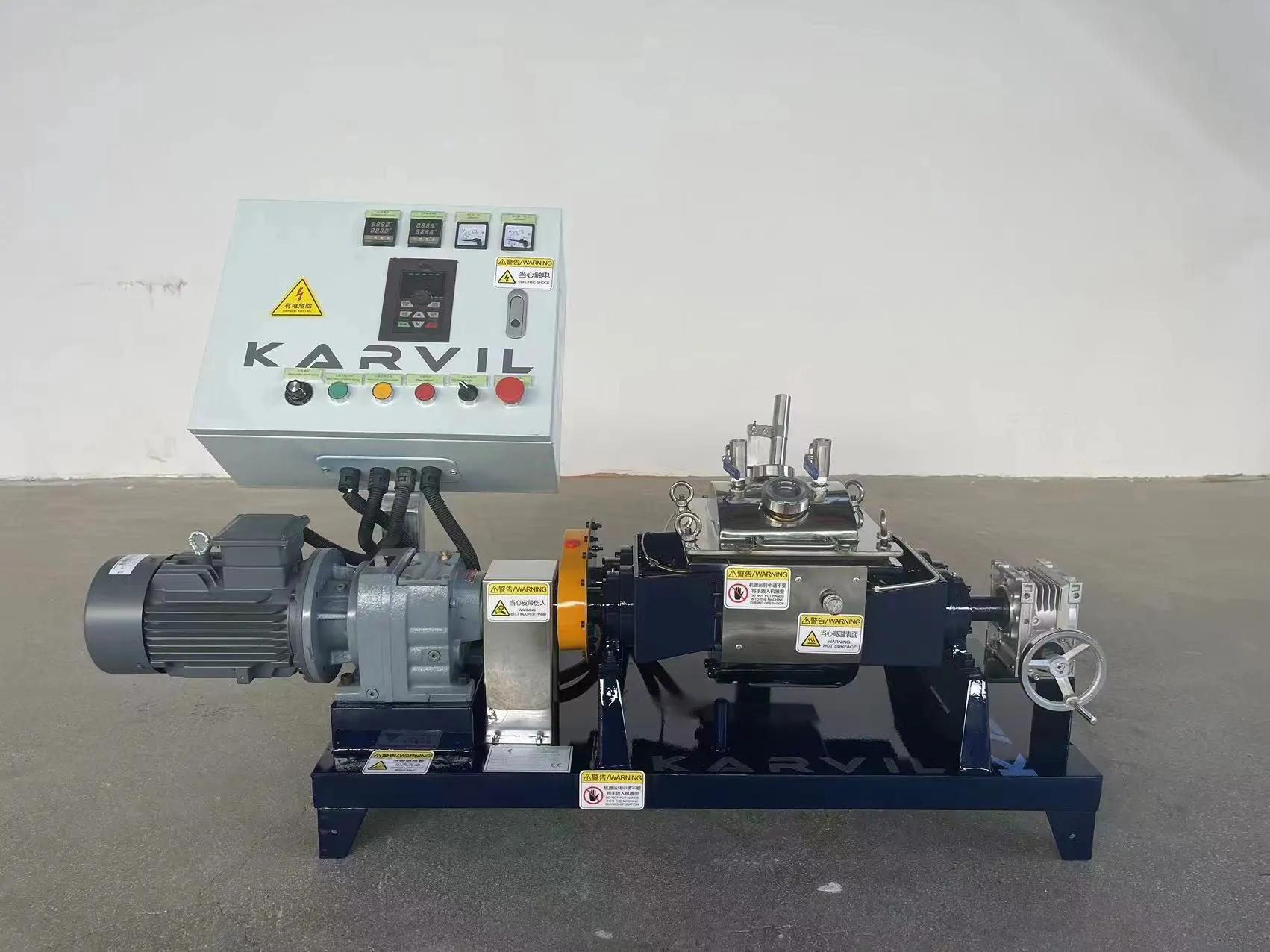
Understanding the Sigma Mixer
Sigma Mixer, often referred to as a kneader, is a crucial tool in the processing of high-viscosity materials, such as polymers. Its design typically features two sigma-shaped blades that rotate towards each other at different speeds, creating a high shear and mixing action. This unique configuration ensures thorough blending, kneading, and homogenization of materials, making it ideal for complex polymer mixtures.
Key Features of the Karvil Machinery Laboratory Sigma Mixer
Precision Engineering: Karvil Machinery is known for its high-quality engineering. The Laboratory Sigma Mixer is no exception, boasting robust construction and precise controls that ensure consistent performance.
Versatility: This mixer can handle a wide range of polymers, from thermoplastics to elastomers. Its adaptability makes it a versatile addition to any lab.
Efficiency: Designed for optimal energy use, the Karvil Sigma Mixer ensures that materials are mixed thoroughly without unnecessary energy consumption. This efficiency translates to cost savings and environmental benefits.
User-Friendly Interface: Equipped with an intuitive control panel, the mixer allows for easy adjustments to speed, temperature, and mixing duration, providing researchers with complete control over their experiments.
Safety: Safety is a top priority in any laboratory setting. The Karvil Machinery Sigma Mixer incorporates several safety features, including emergency stop functions and protective guards, ensuring a safe working environment.
Applications in Polymer Research
The Laboratory Sigma Mixer from Karvil Machinery is instrumental in various polymer research applications:
Formulation Development: Researchers can develop and refine new polymer formulations, testing different combinations and additives to achieve desired properties.
Quality Control: Ensuring the consistency and quality of polymer batches is crucial. The Sigma Mixer allows for small-scale testing before large-scale production.
Material Testing: By mixing polymers under controlled conditions, researchers can study the material's behavior, testing its response to different temperatures, shear rates, and mixing times.
Additive Incorporation: Whether it's fillers, plasticizers, or colorants, the Sigma Mixer ensures that additives are evenly distributed throughout the polymer matrix.
Why Choose Karvil Machinery?
Expertise: With years of experience in the industry, Karvil Machinery understands the intricacies of polymer mixing and provides tailored solutions for various applications.
Innovation: Continuous research and development ensure that their equipment stays ahead of the curve, incorporating the latest technological advancements.
Customer Support: Excellent customer service and technical support mean that users can rely on Karvil Machinery for ongoing assistance and maintenance.
The Karvil Machinery Laboratory Sigma Mixer for Polymer is a powerful tool that meets the demanding needs of polymer research and development. Its precision, efficiency, and versatility make it an indispensable asset in any laboratory setting. By investing in such high-quality equipment, researchers can push the boundaries of polymer science, leading to innovative materials and applications that can transform industries.
For more information on the Karvil Machinery Laboratory Sigma Mixer, visit https://www.karvil.com/ or contact info@karvil.com for a detailed consultation.


