Views: 78 Author: Site Editor Publish Time: 2022-09-16 Origin: Site
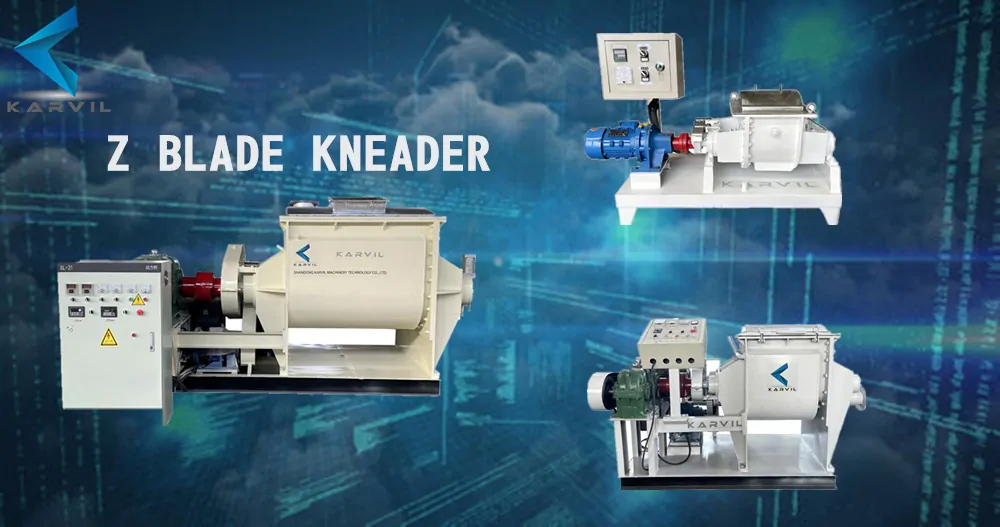
The sigma z blade kneader is suitable for mixing high viscosity materials. It is widely used in ceramics, clay, silicone rubber, chewing gum, brake pads, and other industries. How to choose a high quality kneader when purchasing?
1. The shape of the stiring blades
SIGMA (∑) type is a general purpose stirring blades, which is currently the main form of high quality z kneaders.Sigma blades can mix the materials strongly. The blank area of the double blades can enter large pieces of material, which has a crushing effect. It is widely used in food and rubber polymer industries. The design and production are relatively standardized and mature.
2.The center distance of the stirring blades and the gap between the stirring blades and the chamer wall
Too little or too much space is not good. If the gap is too small, the material layer on the chamer wall is very thin, and less material is ground between the stirring blades and the chamer wall for each rotation of the stirring blades. The buffering effect of the material, the insufficient shearing and grinding strength in the material layer, all affect the kneading effect. The mutual extrusion and shearing of the material between the two stirring blades is very important for the final quality of the product to meet the technical requirements, so the center distance between the two blades should not be too large, generally twice the rotation radius plus 6~15mm.
3. The speed of the two stirring blades
Generally, the two stirring speeds of z blade mixers are different. The rotation speed should not be too fast. If the rotation speed is too fast, the material will be thrown up and impacted in the kneader, and the power consumed has little effect on the grinding of the material, and the efficiency is not high. The rotation speed should not be too low, otherwise the kneading time will be prolonged and the daily output will be reduced. For sigma blade kneaders for pigments/dyes, the speed of the high-speed shaft is generally 25~35rpm, and the low-speed shaft is 16~24rpm.
Karvil Machinery has R&D and production experience in the z kneader industry for 20+ years. As Siemens supplier on sigma mixer machine in China, Karvil Machinery kneaders have been exported to more than 100 countries. We have rich experience in different industry application, and welcome your inquiry for further discussion.


