Views: 12 Author: Site Editor Publish Time: 2026-05-07 Origin: Site
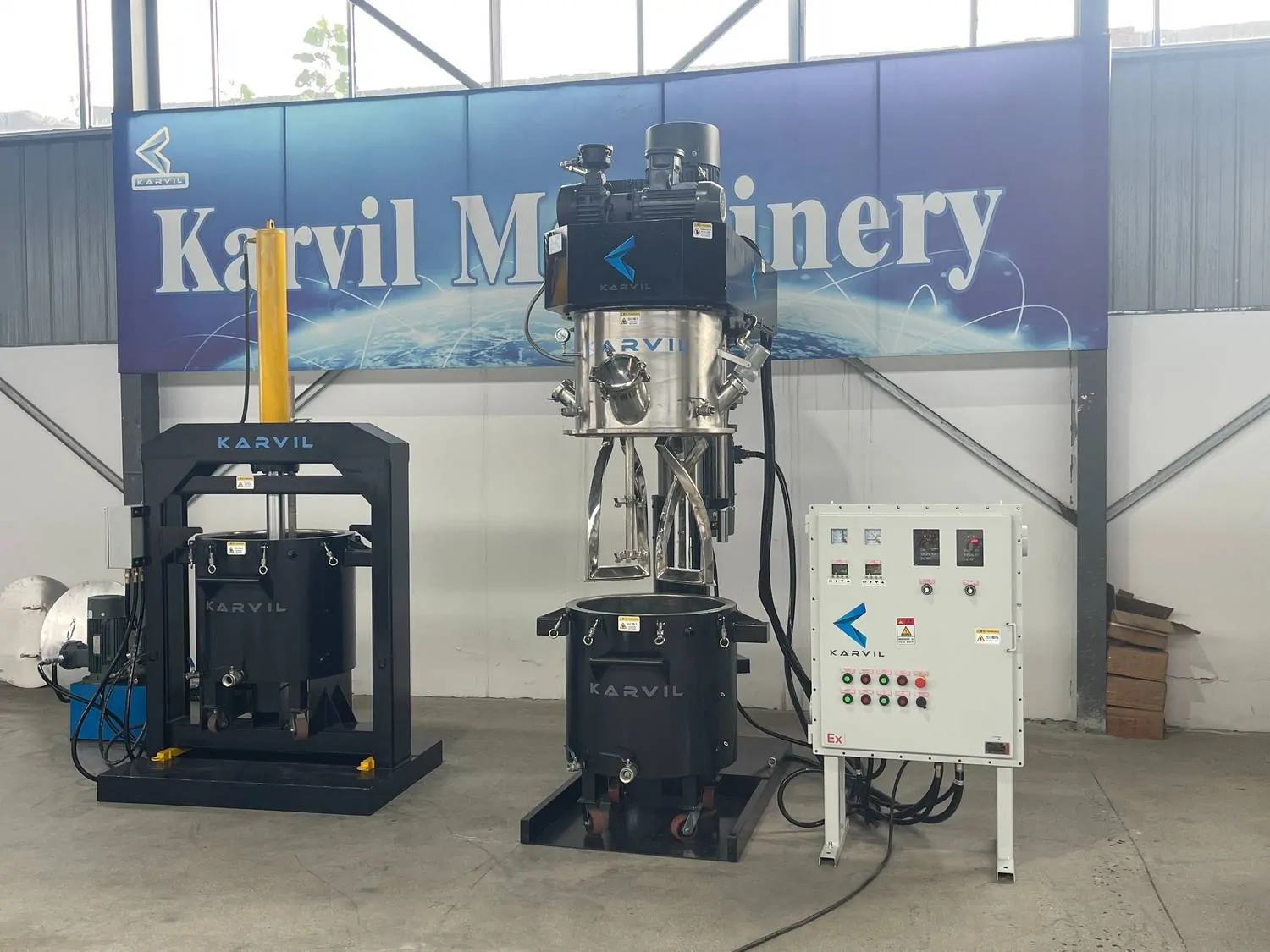
Are you struggling with mixing high-viscosity materials? Whether you are in the adhesives, lithium battery, cosmetics, or food industry, achieving a perfectly homogeneous mixture is critical to your product's quality. A Planetary Mixer (or Double Planetary Mixer) is often the best solution for these demanding applications.
But with so many options on the market, how do you choose the right one? As a leading planetary mixer manufacturer in China with years of experience, we’ve put together this comprehensive guide to help you make the best purchasing decision.
1. Understand Your Material’s Viscosity
Viscosity is the most important factor when choosing a planetary mixer. These machines are specifically designed for medium to extremely high-viscosity materials (ranging from 10,000 cps to over 1,500,000 cps).
Tip: Always provide your supplier with the exact viscosity range and solid-liquid ratio of your materials. This will determine the motor power and the structural strength of the mixing blades required.
2. Select the Right Mixing Blades (Agitators)
The design of the mixing blade directly affects the mixing efficiency and shear force. Common blade types include:
Twist/Spiral Blades: Ideal for highly viscous materials like silicone sealants and battery slurries, offering excellent top-to-bottom turnover.
Frame/Gate Blades: Great for medium viscosity and heat transfer.
Claw-type Blades: Suitable for heavy-duty kneading and dispersion.
Note: Many of our clients benefit from a customized combination of low-speed planetary blades and high-speed dispersers.
3. Determine the Batch Size (Capacity)
Are you doing R&D in a laboratory or running a full-scale production line?
Lab Scale (1L - 10L): Perfect for formulation testing.
Pilot Scale (20L - 50L): For small batch production.
Mass Production (100L - 1000L+): For large-scale industrial output.
Make sure the mixer’s working capacity matches your daily production goals, keeping in mind that the working volume is usually 60%-80% of the total tank volume.
4. Do You Need Vacuum and Temperature Control?
Vacuum System: If your product (like electronic adhesives or battery slurries) cannot contain air bubbles, a vacuum-capable planetary mixer is a must. It defoams the material during the mixing process.
Heating/Cooling Jackets: Many chemical reactions require precise temperature control. Ensure the mixer tank can be equipped with a jacket for water/oil heating or cooling.
5. Why Buy Directly from a Chinese Manufacturer?
When sourcing industrial equipment, working directly with a reliable Chinese manufacturer offers significant advantages:
Cost-Effectiveness: Factory-direct pricing without middleman markups.
Customization: We don't just sell standard machines; we tailor the motor brand (Siemens, ABB), inverter, and material (SUS304/316L) to your exact needs.
Quality Assurance: Rigorous FAT (Factory Acceptance Testing) before shipping.
After-Sales Support: Quick response times and easily available spare parts.
Conclusion
Choosing the right planetary mixer doesn't have to be overwhelming. By understanding your material properties and production needs, you can easily narrow down the options.
Ready to upgrade your mixing process?
As a professional planetary mixer manufacturer, our engineering team is ready to help you design the perfect solution.
Contact Us Today / Get a Free Quote
to discuss your project requirements!


