Views: 46 Author: Site Editor Publish Time: 2026-01-16 Origin: Site
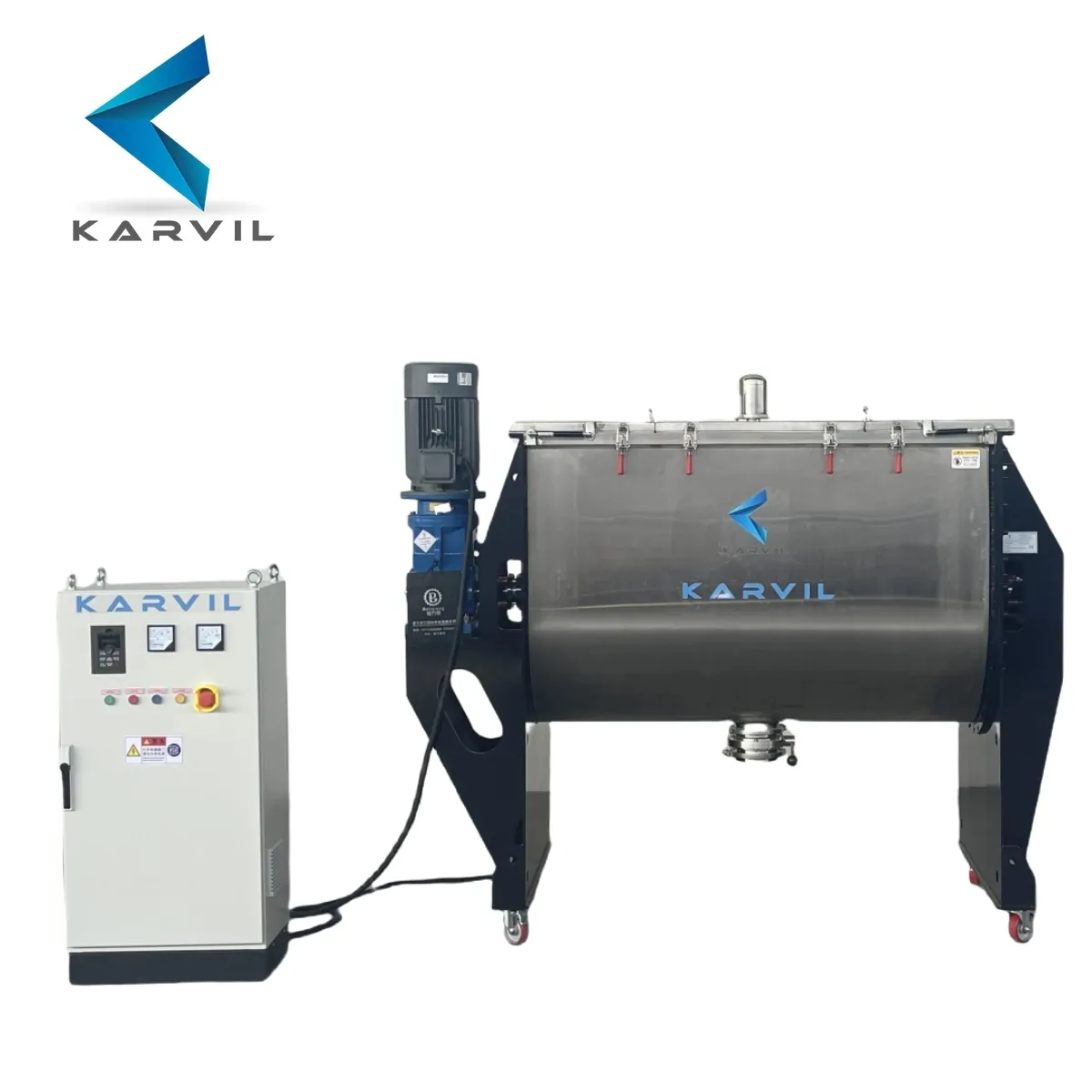
When you face the job of creating a steady powder blend, the risks are significant. Whether you handle gentle food components or rough building chemicals, the gap between a top-notch batch and a ruined one often depends on how your gear works. Getting full evenness calls for a solid understanding of how substances behave with the inner structure of your device.
If you seek a reliable ally who really understands the details of factory mixing, allow me to present Karvil. As someone skilled in this area, I have observed plenty of producers, but this group excels due to their focus on accuracy and protection. They do not merely construct containers; they create practical fixes. With operations in more than 50 nations worldwide, they focus on items ranging from thick kneaders for space fuel to custom Ribbon Mixers for Powder Blending. Their tools hold key approvals like CE, ATEX for risky blast settings, and FCM for food protection, making sure your work line meets global rules such as (EC) No.1935/2004. Selecting them means you get more than a device; you gain a steady expert helper committed to your business growth. This partnership brings real value because they listen to your needs and adjust their offerings accordingly, drawing from years of hands-on work in tough settings. Their machines stand up to daily use without breaking down, saving you time and money in the long run.

One frequent error in powder handling is overlooking the fill amount. Each side-to-side blender features a particular ideal range where the stirrer can shift the substance most smoothly.
For the twin-spiral ribbon to function well, it needs to push the substance outward and side to side. If you fill the unit too little, say under 30% or 40% of its capacity, the ribbons might lack the force to shift the whole pile, causing weak side movement. On the other hand, if you pack it too full, you block the folding process. When the substance rises past the end of the outer ribbon, a still area develops at the upper part. This portion just rides atop the stirrer instead of joining the blend fully. Understanding this basic motion helps operators avoid common pitfalls and improve output quality every time.
To reach the finest outcomes, target a fill height where the farthest ribbon just touches the surface of the substance at its top turn. This setup guarantees the powder gets lifted regularly and folded back toward the middle. Such careful adjustment is what lets the Horizontal Ribbon Mixer Machine gain strong evenness quickly. Operators who master this step often report fewer issues and better results across various production runs.

Speed acts like a tool with two sides. You may believe quicker turns mean quicker blending, but truth relies on the Froude number, a simple measure of push versus pull forces from gravity.
When your RPM climbs too high, outward pull takes over. Rather than the substance rolling and falling in a helpful way for blending, it sticks to the sides of the container. This halts the blending and might harm bits or create extra warmth. Such issues prove dangerous in food work for things like ice cream mix or wheat flour, since heat changes the makeup of the goods. Keeping speeds in check prevents these problems and keeps your products safe and intact.
You need to tweak the speed according to the weight and ease of flow in your powder. Easy, airy powders demand a unique end speed compared to thick, dry wall mixes. A tool called Variable Frequency Drive, or VFD, lets you set the right RPM for a smooth, bubbling action in the material. This managed swirl is vital for spreading tiny parts evenly across the full load. With practice, teams learn to spot the perfect settings for their setup, boosting both speed and quality.
Blending success goes beyond just the ribbon speed; it involves handling the full period from adding the first item until opening the exit gate.
Many think longer blending always yields a superior mix, but actually, extended time can cause splitting or sorting of parts. This occurs as bits of varied sizes or weights begin to part ways from ongoing shakes and shifts. It pays to run a mix-time check to find when your load hits peak evenness, then halt right there. This approach saves energy and avoids waste from poor batches.
The way you add items to the container shapes how well the process runs. Start with your main base parts, then add smaller extras. If you drop a tiny bit of key ingredient or color straight to the empty base, it could stick in the tight space near the ribbon and wall. Instead, layer the small items between base stuff so they get drawn right into the strong mix area of the stirrer. Following this order makes the whole cycle smoother and more reliable.
The small space between the outer ribbon and the container side is a key build element you should watch closely. This distance decides how much stuff stays untouched at the machine's base.
In typical blenders, a coat of stuff can rest quietly at the bottom of the U-form container. A wide gap creates a no-action spot that misses full blending. Top machines use close fits, sometimes just 3mm to 5mm. This lets the outer ribbon brush the side, pulling almost all bits into motion. Such design choices cut down on leftovers and raise overall performance.
For food and drug fields, these no-action areas pose more than a slowdown; they threaten safety. Stuck stuff might hold germs or mix wrongly between runs. Strong builds stress smooth finishes and curved edges with no sharp joins to leave the unit clean after emptying. This focus keeps operations safe and meets health checks easily.
Strong blending counts for little if your work lacks protection or skips rule checks. When picking a blender, consider how it guards the goods and the workers.
Current safety rules require blocking access to active parts during runs. Leading setups include linked safety switches on the top. If someone tries to lift the cover for a look, the unit stops at once. Also, all power parts like chains and engines stay covered fully to block chance touches. These features build trust and cut accident risks in busy plants.
In food work, meeting (EC) No.1935/2004 stands as a must. This requires the steel and any seals to clear EU food touch tests. A unit with CE and ATEX marks readies you for dust blast risks, usual with fine powders like wheat or sweets. Such standards keep your site running without legal or safety hits. Choosing certified gear also eases audits and builds customer faith.
Few standard sizes work for all in factory blending. Your method might need robust strength for space fuel in aircraft work, or soft care for tooth supplies and snack bars.
The best tools stem from broad field knowledge. From wall mixes in Europe to battery pastes for electric cars in the US, tailoring the ribbon setup, like mixing paddles with ribbons or adding spray lines for liquids, turns a basic unit into a top performer. This flexibility meets unique needs and drives better results in diverse markets. Companies with global reach understand local rules and adapt quickly to client demands.
Your link to the tool should not stop after buying. You merit a firm one-year promise supported by ongoing expert advice. In global trade today, getting full English guides, clear wiring plans, and far-off tech help proves essential. This setup means that facing a problem brings quick fixes from pros without high-cost site trips. Reliable support turns potential issues into minor bumps, keeping your line active and productive over years.
To boost your blending process fully, take a complete view. By handling fill amounts, setting RPM wisely, and following batch order physics, you reach excellent evenness. Pairing these steps with gear that meets top safety and clean standards makes your work line a steady base. In the end, smart choices here lead to smoother operations, lower costs, and happier clients across your industry.
Q: How do I know if my mixing cycle time is too long?
A: You should perform a "thief test" where you take samples from different parts of the mixer at 2-minute intervals. If the variance between samples begins to increase after a certain point, your material is segregating, indicating that you have exceeded the optimal mixing time. This simple check helps you fine-tune without guesswork.
Q: Can I mix liquids into my powder using a ribbon mixer?
A: Yes, you can. However, for maximum efficiency, the liquid should be introduced via a spray bar located above the center of the agitator. This ensures the liquid is misted onto the powder while it is in a state of high turbulence, preventing the formation of large clumps. It works well for many recipes needing wet-dry blends.
Q: What materials are best for food-grade applications?
A: You should always specify Stainless Steel 304 or 316L. It is critical that the product materials have passed the EU food contact material test and comply with (EC) No.1935/2004 regulations to ensure no harmful substances migrate into your food products. These choices protect health and meet strict standards worldwide.


