Views: 13 Author: Site Editor Publish Time: 2026-02-06 Origin: Site
The world of energy storage changes fast these days, and there is little room for mistakes. If you work in making batteries, you understand that how well your electrode coating turns out depends completely on the slurry's features. Things like air pockets, spots where particles bunch up unevenly, and sudden heat rises all hurt how well things run. To fight these problems, you need a way to mix that connects lab-level care with big factory output. This kind of tool helps keep your process smooth and your products strong. In the end, picking the right mixer can make a real difference in your daily work and long-term goals.
When you want to improve your setup, you need a company that really knows thick material handling. Karvil does more than build machines; they design how liquids and solids work together. After more than ten years in the field, they have learned how to spread tough conductive parts into even mixes. Their group tackles each job with a focus on fixes first, making sure your flow issues— no matter if you use LFP, high-nickel NCM, or solid-state types— get a machine built just for them. From strong safety rules to deep knowledge of the business, they set the top mark in mixing tools. This approach helps clients from small labs to large plants, and it shows in the trust people place in their work. Over time, Karvil has helped many teams solve tough spots and reach new levels in production.

Making battery slurry means more than just blending parts; it is a detailed mechanical task. You have to spread tiny powders such as carbon black and active stuff into a thick binder liquid. If the spread does not work well, the power flow inside the battery ends up spotty. This can lead to weaker cells and shorter life for the whole pack. Good mixing keeps everything balanced, which ties right to how the battery performs in real use. Without it, small errors grow into big costs down the line.
Regular mixers often have a hard time with thick materials because they leave "dead areas" where the mix sits still. This leads to lumps that block coating tips and make weak patches on the electrode sheet. To fix this, you need a setup that makes sure every small bit of the batch gets the same push from the machine. Such even work cuts waste and boosts quality across the board. In busy lines, this reliability saves time and keeps teams moving forward without constant stops.
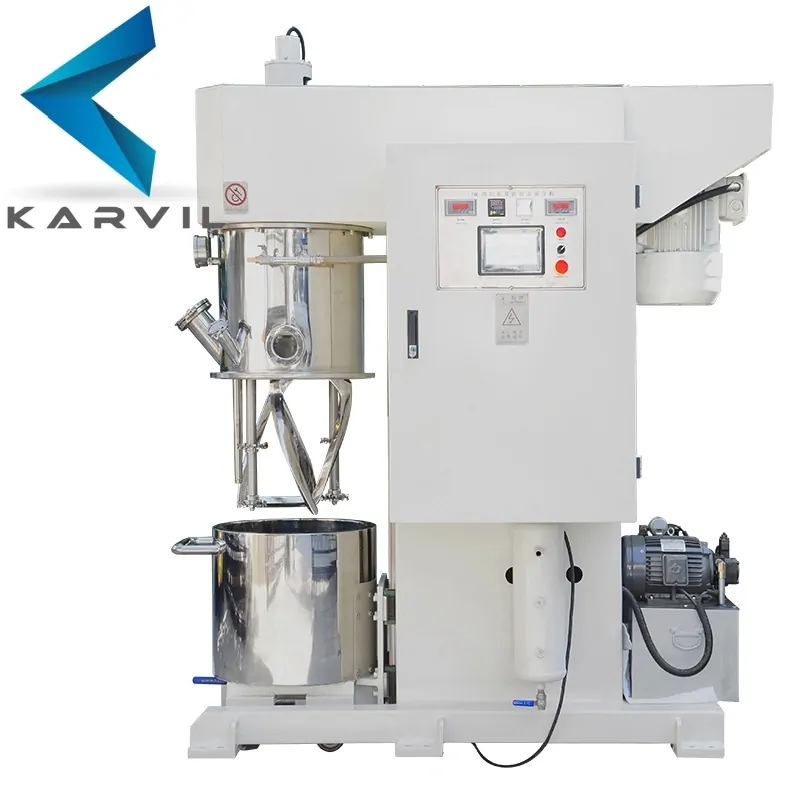
The Double Planetary Mixer fixes the evenness problem with a smart two-way movement. In this setup, two separate blades turn on their own centers while also circling a shared point. Picture it as a world spinning as it goes around the sun. This motion reaches every part of the container without missing spots.
When you run the device, the blades keep covering the full inside wall of the container. They wipe the material from the sides and bring it back to the middle. Since the blades come close with just a few millimeters between them, they create strong cutting forces. This action breaks up stuck groups and makes sure the conductive parts cover the active particles just right. The result is a slurry that coats smoothly and builds better batteries. Users often note how this leads to fewer rejects and higher yields in their operations. With practice, it becomes clear why this design stands out in tough jobs.
Getting an even mix is just part of the job. If your slurry has tiny air pockets, they pop open while drying after coating, which leaves small holes or dents on the electrode. These flaws cut down the working area of the battery and might cause hot spots in one place. Such issues can shorten life or even lead to failures under load. Keeping air out from the start ensures stronger, safer cells that meet market needs.
Old mixing methods pull air into the paste. To get rid of it, you need a system that pulls out the air while folding the material. This combined step saves time and improves the final mix quality. Without it, extra work comes later to fix bubbles, which adds cost and delay to your line.
Adding a strong vacuum seal to the mixing area changes how the slurry acts. Under a deep pull— often hitting -0.098MPa— the pressure inside trapped air pockets gets higher than the liquid's push outside. This makes the pockets grow and float up. The vacuum pulls them out quickly, leaving a cleaner mix behind.
The best part of the circling motion is how it works like a pump for these pockets. The blades always lift new material from the tank bottom to the top. As the slurry hits the surface in the low-pressure space, the pockets break and the air gets drawn away. This mix of stirring and air removal means that when your batch ends, the slurry feels thick and clear like glass. This process fits well in fast-paced setups, where every minute counts toward meeting deadlines. Teams that use it report smoother coatings and better battery tests right away. Over runs, it builds confidence in the whole production flow.

In your plant, safety comes first; you cannot skip it. Whether you handle burning liquids in NMP mixes or tight clean rules in other fields, your tools must guard your workers and your goods. Good design keeps risks low and lets focus stay on making quality items.
Our way of building centers on what you need for safety. You see that all power parts sit fully covered to stop chance touches. We add "open-top" stop buttons that cut all movement right away if the container has issues. On top of that, we hold world approvals to ease your mind:
l CE and ATEX: For safe work in risky places with explosion risks.
l FCM Compliance: Our parts passed the EU test for food touch and follow (EC) No.1935/2004 regulations.
This setup means the steel and seals in your mixer get checked to avoid adding metal bits to your battery mix. Such care keeps purity high and meets strict standards that buyers expect. In global markets, these marks open doors and build trust with partners everywhere.
No two slurry recipes match exactly. A single type for all fails when you push for new ideas. You could deal with heavy pull needs in rocket fuels or soft thickness in tooth pastes. Each case calls for changes to fit just right.
Our background covers more than fifty lands, from most spots in Europe to places in the Americas. This wide reach lets us build special skills in many areas:
l Aerospace & Defense: Blending strong energy stuff like blasts and rocket fuels.
l Chemicals & Adhesives: Working thick glues and rubbers that need big power.
l Food & Pharma: Smoothing gum bases, snack bars, and health pastes.
Picking this tech opens a set of change options. If you want turning blades for up-down flips or wing shapes for thick kneads, the gear gets made for your job. This flex helps in R&D where tests lead to breakthroughs. Clients value how it adapts, turning custom needs into working solutions fast.
Getting a mixer starts a long tie that lasts years. You want to know help sits ready even at odd hours like 2:00 AM mid-week. Solid backing keeps your line running without big breaks.
We offer a full one-year cover on all gear, but our promise goes further. You get ongoing tech talks for life. If a new material issue pops or a small glitch hits, our experts give far-off aid to fix it quick. To ease your day-to-day, each unit includes:
l Complete English guides for running.
l Clear wiring maps for your fix team.
l Expert far help for setup and tune.
Moving to big battery making needs gear that takes the load. By using the two-way cut of a circling system and the pull of vacuum air removal, you wipe out the main threats to your output: lumps and pockets. This focus raises quality and cuts down on scrap that wastes time and money.
With care on safety, world checks, and a broad record of changes, this mixing way gives the steady base to keep ahead. You do more than get a tool; you put money into even results for what you make. In a field that grows quick, this edge helps you lead and grow your share. Teams that switch often see gains in speed and trust from end users who want reliable power sources.
Would you like me to provide a customized quote for your specific slurry viscosity, or perhaps you want to discuss which blade geometry is best for your current project?
A: Yes. The double planetary system is specifically designed for high-viscosity applications up to 1,000,000 cps. The high-torque motors and reinforced planetary gears allow you to knead thick pastes that would cause standard mixers to stall or overheat. This strength comes from careful build choices that handle heavy loads without strain. In research settings, it supports tests with new formulas that push limits.
A: Each mixing vessel is equipped with a precision-engineered cooling jacket. You can circulate water or oil through this jacket to dissipate the heat generated by mechanical friction, ensuring your binders and active materials stay within their safe temperature window. This feature keeps runs long and steady, avoiding breaks for cool down. Operators find it simple to manage, with controls that fit most setups.
A: Absolutely. We often work with clients on pilot-scale testing to verify the dispersion quality and de-aeration time for their specific formulas. This ensures the blade configuration and motor power are perfectly matched to your needs before the final build. Such trials cut risks and let you see real results early. Many partners start here to build sure steps toward full use.


