Views: 27 Author: Site Editor Publish Time: 2025-12-05 Origin: Site
 Wet Granulation and the Role of Sigma Blade Mixers in Industrial Mixing
Wet granulation serves as a key process in pharmaceutical and chemical production, turning fine powders into easy-flowing granules that can be compressed well. Whether you make tablets or prepare catalyst supports, your results depend on good control of blending, binder spread, and material evenness. One effective tool to deal with thick and sticky substances in wet granulation is the sigma blade mixer.
Before we explore the technology, consider a firm that has earned trust in strong mixing gear: Karvil. With solid knowledge in creating custom blending setups, Karvil provides modern sigma kneaders and Z blade mixers made for tough factory uses. Their machines impress with strong build, flexible options, and smart control features—which make them a dependable choice when accuracy and reliability count.
Wet granulation means adding a liquid binder to powders so you form granules ready for later steps like pressing into tablets or drying out. The approach covers main stages: first, blending dry items together; then, mixing wet with the binder liquid; next, shaping the granules; and at last, removing moisture through drying.
Picking the best gear matters a lot since every part needs certain mechanical moves and setup conditions. Poor blending can cause uneven binder spread, varying granule sizes, or low-quality end products.
The value of the blending setup shows clearly, as it ties straight to the speed, item standard, and safety in chemical making.
To work well in wet granulation settings, your blender must handle various tough issues:
· Shear force generation: Strong shear helps even out binder spread and breaks up clumps.
· Handling high-viscosity materials: Certain recipes turn very thick and clingy during the wet mixing phase.
· Temperature and solvent control: Delicate parts need exact heat management and material matching.
For blending thick substances, you need a unique paddle shape and adjustable-speed setup to push past the thickness and pushback of the stuff, leading to solid mixing results.
The sigma blade mixer, sometimes called a Z blade mixer or sigma kneader, gets built to manage wet massing tasks with great skill.
Sigma mixer goes by names like the z blade mixer or sigma kneader mixer, which handles kneading and mixing of thick substances. It has two mixing blades shaped like the Greek letter sigma (∑), placed side by side in the bowl's troughs. These paired blades turn at different speeds within a flat trough, forming sharp shear areas perfect for sticky items.
The tight gap between blades and trough sides adds extra rub, boosting the kneading effect and cutting down on unused spots.
When you want steady wet granules batch after batch, just shear strength won't do—you also require toughness and accuracy. Sigma mixers shine in this area:
The sigma mixer fits well for working with thick, half-solid, and rubber-like stuff, and its frame aims at powerful shear blending. Their sturdy structure manages heavy pastes such as glues or drug mixes without quick breakdown.
They provide top-notch liquid spread in wet massing because of the matched blade turns. You get reliable outcomes over many runs while cutting waste.
If your work calls for low-pressure setups, strong resistance to wear, and adjustable features, the Sigma Kneader Mixer from Karvil meets all those needs.
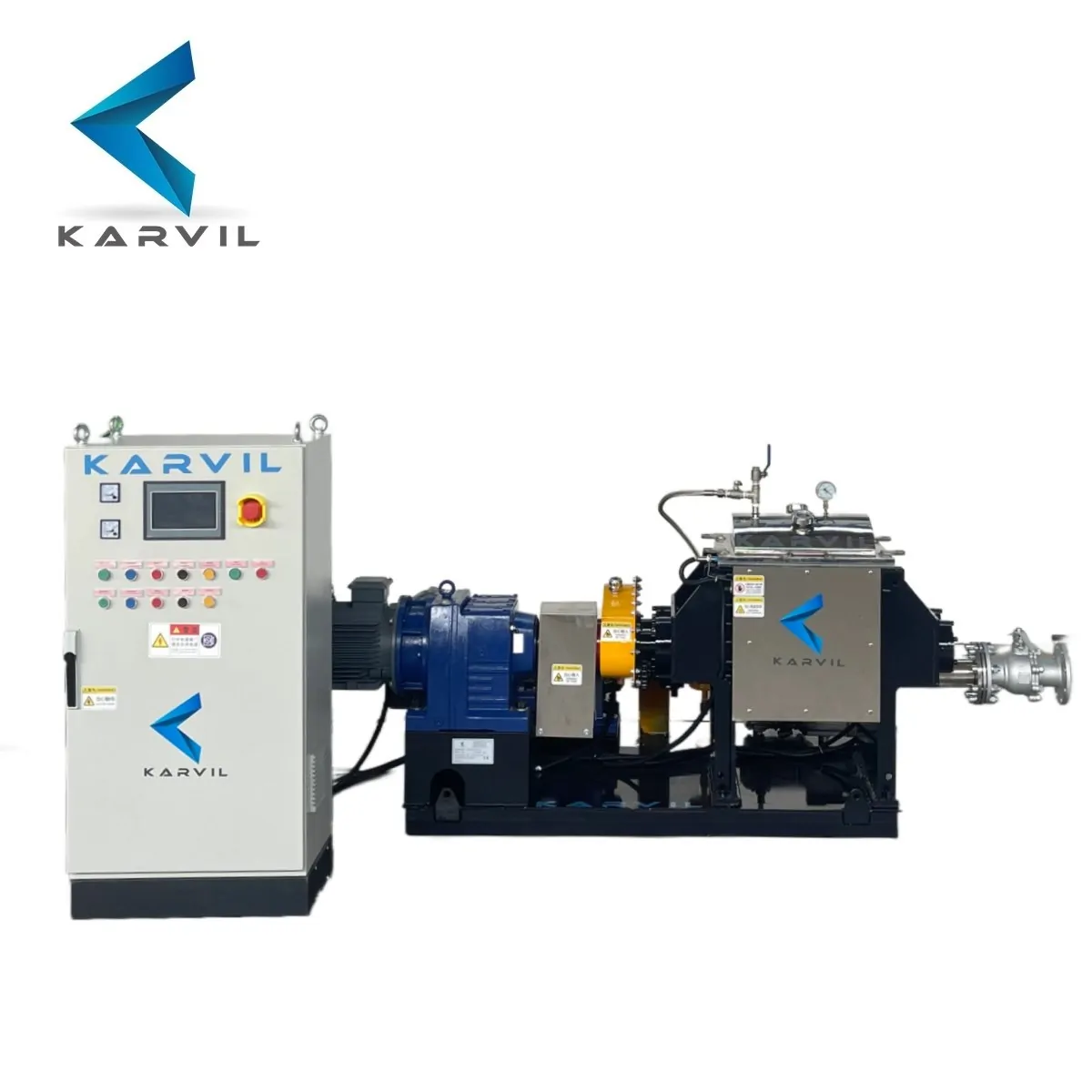
The 50L Vacuum Cooling Sigma Mixer comes with a Siemens motor using frequency inverter control, stainless steel parts in contact coated with tungsten carbide for lasting against wear, and a PLC panel with touch screen setup. Its screw-based discharge setup allows clean removal of clingy material while keeping product loss low.
Recipes sensitive to heat gain from its built-in vacuum system (-0.09 MPa) and cooling jacket, which holds heat levels steady all through wet granulation runs.
This mixer works great for drug uses that demand exact binder mixing with main ingredients. It also does well in chemical fields where catalyst supports or soap bases need even blends under set conditions.
Commonly applied in ceramics, sealants, pharmaceuticals, carbon pastes, and pigment fields, it shifts easily from small lab sizes to big factory output with sizes from 5L to 5000L.

When running long batch runs or with very clingy mixes like rubber glues or solid paints, you require equipment that fights off wear from use. The Heavy Duty Z Blade Mixer gets designed just for those cases.
The mixer uses heavy-duty Z-shaped cast steel blades covered with SS304 stainless steel, PTFE stuffing box seals, and hydraulic tilting discharge for safe and quick material emptying.
Its base frame builds from carbon steel shielded by a rust-proof layer, stretching out its life even in rough settings.
This mixer promises steady handling of glue-heavy or stretchy materials via even power delivery. Smooth-polished contact areas keep clean processing spaces while reducing cling problems.
You can look for faster run times without losing evenness—perfect when making demands quick pace without dropping standards.
Not every blender handles heavy or thick items well. Planetary mixers often lack enough shear power. Ribbon blenders might not spread binders evenly in sticky powders.
Standard blenders mainly suit mixing low- to medium-thick liquids or bits, so they work poorly or not at all for jobs with heat-sensitive parts or mixes heavy on solvents.
When dealing with thick systems under changing heat pressures, sigma mixers bring key benefits:
Current blending systems often include smart sensors and auto-control setups, which watch process details live. With outer-heated pots and low-pressure options, you achieve exact heat control, and growing from test runs to full output stays smooth over different sizes.
Karvil does more than sell devices—they provide full blending answers matched to your work needs. From blade shapes to pot forms, their design group makes sure your gear matches your recipe exactly.
The skilled group of engineers focuses on research and planning of blenders and grinding tools, giving help from start of project to setup.
Repair stops can hurt output. Karvil tackles this with upkeep plans ahead and fast supply of extra parts. Their help lines stay open for tech advice or gear updates as your work grows.
Karvil factory runs a set of tight rules to check raw material buys and building steps, ensuring high item quality.
Q1: Can sigma blade mixers be used for solvent-based granulation?
A: Yes. Thanks to their sealed troughs and vacuum capabilities, they are excellent for processing solvent-rich systems with minimal evaporation losses.
Q2: What’s the typical cycle time for wet granulation using a sigma blade mixer?
A: Depending on material viscosity and formulation complexity, cycle times generally range from 10 to 30 minutes per batch.
Q3: Are sigma mixers scalable from lab to industrial production?
A: Absolutely. These mixers are available in capacities from as little as 5L up to 5000L, offering consistent performance across scales.


