Views: 20 Author: Site Editor Publish Time: 2026-01-23 Origin: Site
Achieving a perfectly consistent blend is the true soul of your factory floor. Whether you are tossing around fine food powders or heavy-duty building materials, the thin line between a stellar batch and a ruined load usually depends on five vital things. If you have already picked up a professional machine, your main goal moves from just buying it to making it run better: how do you push the gear to go faster, mix with more precision, and stay within strict safety rules?
Before we jump into the gritty technical tweaks, it is helpful to know who is sharing these tips. As seasoned pros in the world of industrial blending, Karvil has spent decades figuring out exactly how mechanical power and material behavior play together. We do more than just build metal boxes; we craft smart fixes for the toughest jobs on the planet. Our footprint reaches over 50 countries, covering almost every nation in Europe and the Americas. From building mixers that handle aerospace rocket fuel and explosives to super-clean systems for gum bases and protein bars, our work is diverse. We really believe in a "human-first" style of engineering. This means when you pick a high-end mixer, you are not just getting a piece of hardware; you are gaining a partner for life. Our crew gives you easy-to-read English guides, clear wiring maps, and remote help from real engineers to make sure your plant never hits a boring or costly snag. We provide a one-year warranty, but our team also offers lifelong technical advice whenever you need it. We bridge the gap between scary industrial needs and smooth, everyday work.

The biggest slip-up people make in powder work is totally ignoring how full the tank is. You might guess that filling the tub to the very top would get more work done, but in the real world, it actually kills your mixing quality. For a horizontal ribbon mixer, the big secret lives in something called the "fluidization zone."
To get a really steady mix where every sample looks the same, you have to keep your fill level between 40% and 60% of the total space. When the pile of stuff gets too high, it buries the middle shaft completely, leaving no room for the powder to "jump" or tumble around. This creates dead spots at the very top that just sit there. On the flip side, if the load is too tiny (like under 20%), the outer blades can't grab enough material to push it around properly.
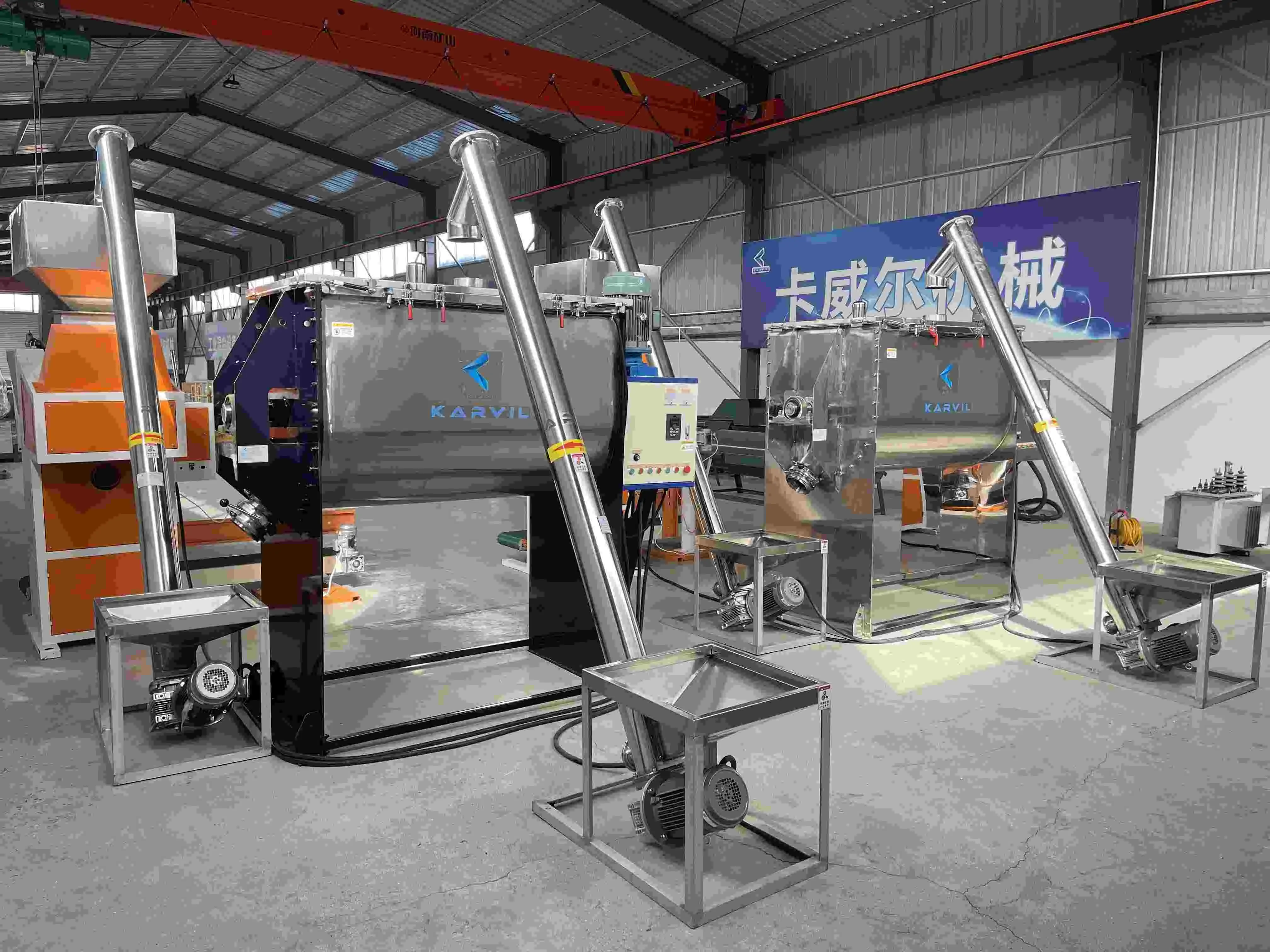
Professional gear like the Horizontal Ribbon Blender Mixer for Powder Mixing is built to handle this. The tools you use should have clear marks inside or even weight sensors to help you hit that 40-60% target every single time. This accuracy makes sure the double-helix blades can move the stuff in opposite ways, creating the wild, messy motion needed for a perfect blend.
Space is just one part of the puzzle; you also have to think about how heavy or dense the powder is. If you are mixing heavy rocks for dry mortar in the construction industry, the pull on the motor is way different than if you were mixing light ice cream powder. A solid system handles these differences with tough parts, making sure the blades keep a steady beat even when the material is incredibly heavy and thick.
Speed can be a bit of a double-edged sword. If you spin the blades too slowly, the mixing job takes forever. But if you go too fast, a different force takes over and ruins the whole thing.
When the blades whip around too fast, the powder gets stuck against the walls because of centrifugal force, which basically stops the mixing dead in its tracks. This can also get things too hot, which might ruin ingredients that are sensitive to heat. The best speed is usually found by looking at how the force of movement compares to the pull of gravity.
For most powder jobs, you want the material to be lifted and tossed into the air inside the tub. Using a Variable Frequency Drive (VFD) lets you tweak this speed perfectly. This is super helpful if your factory switches between different recipes—you can speed it up for stuff that flows like water and slow it down for sticky or clumpy powders.
If your ingredients are brittle or break easily, high speeds will smash them into tiny bits. In those cases, being efficient isn't just about finishing fast; it’s about keeping the product in one piece. The goal is to reach a perfect blend right before the particles start to crumble, a timing window that only high-end machines can hit without failing.
The actual shape of the metal ribbon is what tells the powder where to go. A normal double-helix setup moves stuff in two paths: the big outer ribbon pushes things toward the middle, while the smaller inner ribbon shoves it back toward the ends.
A huge factor that changes how fast you finish is the tiny gap between the outer blade and the wall of the tank. If this gap is too wide, a layer of "lazy" powder just sits at the bottom and never joins the party. This leads to a batch that looks great on top but fails a lab test because of the unmixed "crust" hiding at the bottom.
Top-tier manufacturing makes sure these gaps are kept very tight (usually around 3mm to 5mm). When you use a Ribbon Mixer for Powder Blending built with this kind of care, the sweep is so clean that you almost never have to scrape it out by hand between batches. This doesn't just make the mix better; it also makes the whole tank empty out much faster.
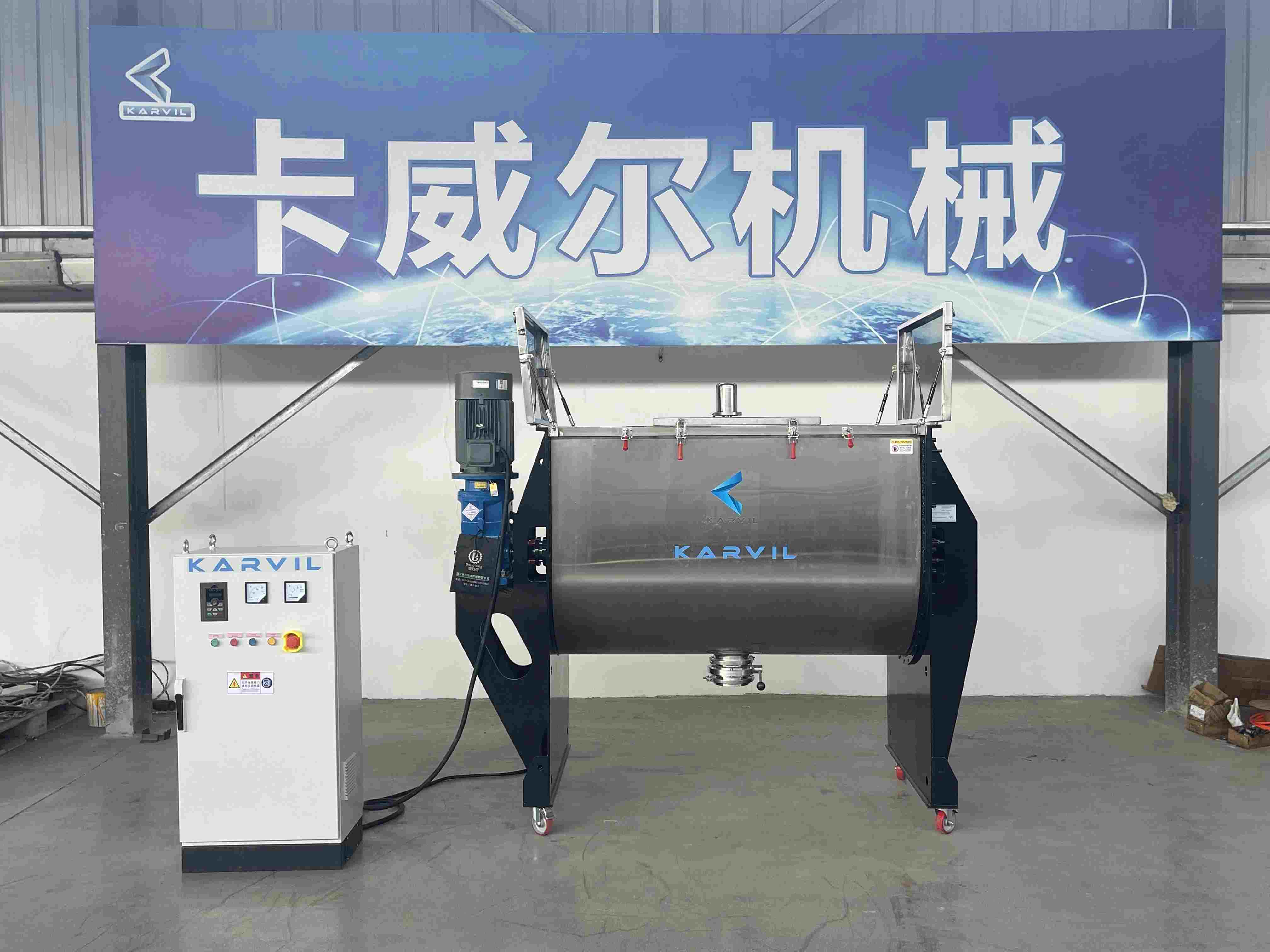
The smart design of the double helix makes sure the whole pile is always moving. This side-to-side and up-and-down motion is exactly why a ribbon blender can hit a 95% to 99% perfect mix way faster than those simple vertical mixers that just stir things in a circle.
In the world of modern factories, you can't be fast if you aren't safe and following the law. A machine that is scary to use or a pain to wash will eventually lead to a very expensive shutdown.
Your workers are the most important part of your business. The best machine designs use "Active Protection." This means things like safety sensors on the lid—the second the top is opened, the blades stop instantly so nobody gets hurt. Also, all the moving parts like chains and gears should be hidden inside metal boxes so no one can accidentally touch them.
When you are working in tough spots, like chemical plants or aerospace sites making rocket fuel, you need gear that won't cause an explosion. You should look for machines that have CE and ATEX badges, which prove the motors and wires are safe even when the air is full of stuff that could catch fire.
If you are making food or medicine, what the machine is made of matters a ton. For things like flour or protein bars, the metal that touches the food has to be perfectly clean. Product materials have passed the EU food contact material test and comply with (EC) No.1935/2004 regulations. This makes sure no weird chemicals leak from the steel into your snack. Smooth, shiny welds and a design with no hidden cracks make washing the machine much faster, which lets you make more product every single day.
The last part of staying efficient is how you look after the machine over many years. A blender is like a strong workhorse, and just like a horse, it needs the right food and care to do its best work.
Efficiency takes a dive when a worker doesn't know how to fix a simple wire problem. This is why having a great English manual and clear maps of the electronics is so important. It lets your own fix-it team handle small hiccups right away instead of waiting for help.
Even though most good machines have a one-year promise to fix breaks, the real prize is being able to ask for advice forever. Whether you are building a bigger plant or trying a totally new recipe, having a way to call up expert engineers for remote help keeps your gear moving as your business grows. This kind of deep knowledge is huge for tricky jobs like making sticky gum, thick glues, or battery gunk, where small changes in how you mix can lead to a much better product.
Q: Can I use a ribbon blender for both dry powders and wet pastes?
A: Yes, you can, but you have to be careful. While the ribbon blender is amazing for dry stuff like flour or mortar, it can handle a little bit of liquid if you use a spray bar. For really thick, sticky stuff like gum or rocket fuel, a different kind of machine like a kneader or a planetary mixer (often used for battery slurry and dental materials) is usually a faster choice. However, for "damp" or slightly wet powders, the ribbon blender is still a fantastic option.
Q: How do I know if my mixing time is actually as fast as it can be?
A: The smartest way to find out is to run a test. Take small samples from different parts of the tank at 3 minutes, 5 minutes, and 8 minutes. Once the samples all look and test the same, you've found your perfect time. Usually, this happens somewhere between 5 and 15 minutes, depending on what you are mixing.
Q: What is the best way to add tiny amounts of extra ingredients?
A: You should always put your "main" ingredients in first to get the flow started. Small extras or secret ingredients should be added toward the middle of the mixer while it is spinning (make sure the safety grates are on!). This way, they get pulled right into the heart of the double-helix movement and don't get stuck in a corner or under the lid.


