Views: 24 Author: Site Editor Publish Time: 2026-03-11 Origin: Site
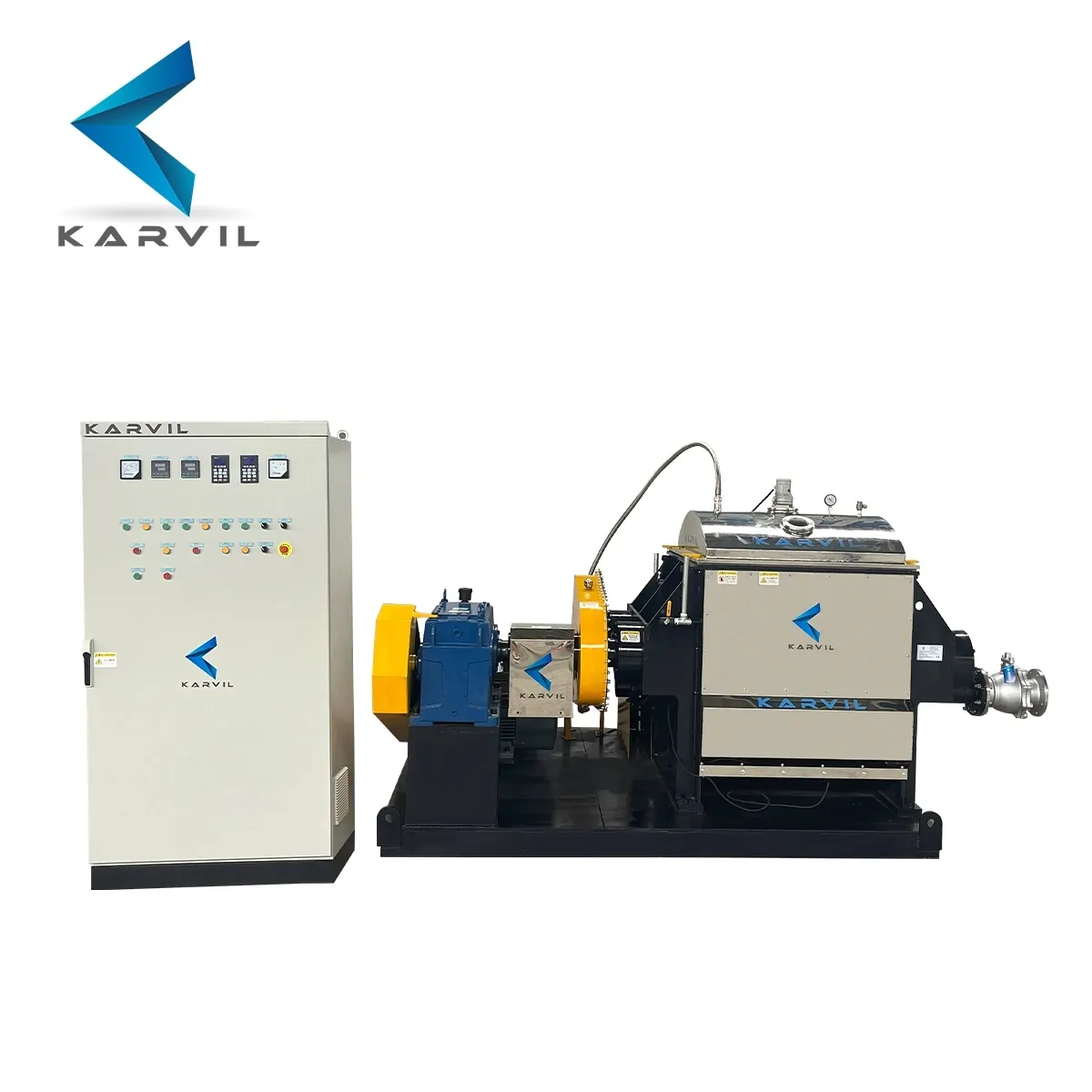
When you look at the difficult job of modern manufacturing—whether you are working with dangerous things like rocket fuel or making something safe like protein bars—getting the temperature right is everything. It is the one thing that separates a great product from a pile of waste that you have to throw away.
For factory managers and engineers who have to work with thick, sticky materials, the Sigma Mixer (also known as a Z-Blade Kneader) is usually the best machine for the job. This is because it is very strong and can mash and pull materials apart better than anything else. But, there is a catch. The very thing that makes these machines so good—their power—also creates a problem: heat. When you mix things that hard, friction creates heat naturally.
If you are mixing materials that change or spoil when they get hot, like rubber-based glues, explosives, or special medical pastes, this heat can be a nightmare. If the heat builds up too much in one spot, your material might ruin, fail to cure properly, or even become dangerous.
The big question for anyone running a plant is this: How do you keep the temperature exactly the same all the way through a thick, heavy mix that does not want to let go of its heat?
This guide is going to walk you through the best ways to fix heat transfer problems in Sigma Mixers. We are going to look past just using a simple heating jacket and talk about smarter hardware, better safety features, and how to control the process. We will look at how Karvil, a company that sends machines to over 50 countries in Europe and the Americas, handles these tough problems to meet the high standards required by these industries.
The old-school way to control temperature in these mixers is pretty simple: you just put a jacket around the mixing bowl and pump hot or cold water through it. This works fine for easy jobs. But when you are dealing with really thick, sticky stuff, this method often isn't enough. The material in the middle of the bowl doesn't touch the cool walls, so it stays hot. To keep your heat-sensitive materials safe, you need to change how the machine is built.
In a normal mixer, the big steel Z-blades are solid metal. This can actually be a problem. When you start the machine, those big blades are cold and suck heat away from your mix. Later, when you are trying to cool things down, those heavy blades hold onto the heat like a battery and fight against your cooling system.
The solution is something called Cored Blades. Engineers at Karvil figure out a way to drill channels right through the rotating shafts and into the Z-blades themselves. This lets them pump water, steam, or oil directly inside the moving blades.
Think about what this does. It turns the blades into active heaters or coolers. Since the blades are the parts that are actually pushing and folding the material, they are always in contact with the hottest parts of the mix. This increases the surface area that can remove heat by a huge amount—often by 30% to 50%.
For industries like aerospace, this is a huge deal. If you are mixing solid rocket fuel, you absolutely cannot let friction create a "hot spot" that might spark a fire. By cooling the blades from the inside, you make sure the friction heat is pulled away the second it is created.
Sometimes, treating the whole mixing bowl as one big zone is a mistake. For complicated chemical reactions, you might need different temperatures in different spots.
This is where Split-Jacket Designs come in handy. Karvil can build machines where the mixing trough is split into different zones that you can control separately. For example, if you are making a sealant or adhesive that hardens over time, you might need to cool the bottom of the bowl really hard because that is where the most friction is. But at the same time, you might want to keep the side walls a bit warmer so the material doesn't get too hard and stick to the sides. This gives you way more control.
Getting the heat right is important, but you cannot forget about being clean, especially if you are in the food or medicine business.
If you are making chewing gum, dough, or protein bars, the metal of the mixer is touching your food. You need to be sure it is safe. Karvil makes sure that every part that touches your product is polished until it looks like a mirror. This isn't just to make it look nice—it helps heat move better and makes it very hard for bacteria to hide.
More importantly, they have the paperwork to prove it is safe. The materials used in their products have passed the EU Food Contact Material (FCM) test. They strictly follow the (EC) No.1935/2004 regulations. This is a fancy way of saying that even when the machine gets hot, no bad chemicals will leak out of the steel and into your food. This gives you peace of mind that your product is safe to eat.
You can have the best machine in the world, but if you run it wrong, you will still have problems. "Hot spots" usually happen in "dead zones"—places where the material stops moving and just sits there getting hotter and hotter.
The space between the Z-blade and the wall of the bowl is called the clearance. This tiny gap is super important for moving heat.
Think of it like scraping a cake batter bowl. If the gap is too big, a layer of material sticks to the wall and never moves. This layer acts like a blanket, stopping the cold from the jacket from reaching the rest of the mix. But if the gap is too small, the blade rubs too hard against the material and creates even more heat.
Karvil uses very precise machines to cut the metal so the gap is perfect. This creates a "wiping" effect. It constantly scrapes the hot or cold material off the wall and folds it back into the middle of the mix. For things like dental pastes or battery mixtures, this consistency is key. You want every bit of the mix to be exactly the same.
Running these machines involves a lot of power and heat, so safety is the number one thing to think about. You need to make sure the people running the machine are safe.
Karvil designs their machines with the user in mind. For example, they have an Emergency Stop system connected to the lid. If someone tries to open the cover while the machine is running, the blades stop instantly. Also, all the moving parts like belts, gears, and chains are completely covered up so nobody can accidentally touch them.
To control the heat, they suggest using a "Cascade Control" system. This sounds complicated, but it's just a smart way of watching the temperature. Instead of just checking how hot the mix is, the system checks the mix and the water in the jacket at the same time. This stops the jacket from getting too hot or too cold, which prevents the material from burning onto the walls.
If you are making medicine or parts for rockets, you have to look at the mixer as part of a bigger system.

Some industries work with really scary stuff, like explosives, fireworks, or glues that have flammable fumes. For these guys, heat control isn't just about quality—it's about staying alive.
This is where the Explosion-Proof Tilting Sigma Mixer comes in. Karvil builds these machines to meet very strict rules, like ATEX and CE certifications. These are European standards that say the machine is safe to use in places where things might explode.
Everything on these machines is built to be safe. The motors are explosion-proof, the control boxes are sealed tight, and the wiring is special. When you combine this with the water-cooled blades we talked about earlier, you have a machine that keeps the temperature down and prevents sparks. This is vital when you are making things like rocket fuel.
Sometimes, things are sensitive to heat because of their boiling point. If you need to dry something out, you usually have to heat it up until the water boils. But that heat might damage your product.
The trick is to use a Vacuum. When you pump the air out of the mixing bowl, you lower the pressure. This makes water boil at a much lower temperature. So, instead of heating your product to 100°C to dry it, you might only need to heat it to 40°C.
Karvil uses this a lot for things like silicone rubber and sealants. It sucks out all the air bubbles and moisture without ever getting the mix hot enough to ruin the chemicals.
Karvil doesn't believe in a "one machine fits all" idea. Because they export to over 50 countries, they have learned how to tweak their machines for different jobs.
This is one of the hardest jobs. You have super thick material that catches fire easily. Karvil provides special Sigma Mixers for solid rocket fuel and explosives. These are heavy-duty beasts. They can be operated from a distance (remote operation) so the worker is safe in another room. They have double cooling systems to make absolutely sure the mix never gets too hot.
Here, the challenge is texture and being clean. For things like chewing gum base and protein bars, you need to keep the mix warm enough to be soft, but not so hot that it cooks. Karvil uses mixers that can hold a very steady temperature. And of course, all the parts touch the food meet those strict (EC) No.1935/2004 rules we talked about, so you can sell your food anywhere in the world.
This covers a lot of ground.
l Sigma Mixers: These are great for hot melt glues and butyl rubber.
l Planetary Mixers: For making the paste that goes inside Lithium-ion batteries or the stuff dentists use to fill cavities, you need a different motion. Karvil uses the same cooling knowledge in their Planetary Mixers to keep these delicate pastes cool.
l Ribbon Blenders: If you are mixing powders, like dry mortar for building or ice cream powder, Karvil has ribbon blenders. These are gentler and can also have heating jackets to dry the powder while it mixes.
Buying a big industrial mixer is a huge investment. You need to know that the company you buy it from will be there if something goes wrong. Karvil has a service plan designed for people who might be on the other side of the world.
First, they give you a full one-year warranty on the machine. But their help doesn't stop when the warranty runs out. They offer lifetime technical consulting. This means if you decide to change your recipe five years from now and the machine is acting funny, you can call them.
Since they sell to places like Germany, Brazil, and the USA, they know they can't always just drive over. That is why they give you very detailed operation manuals and circuit diagrams in English. This makes it easy for your local maintenance guy to fix things. Plus, their professional engineers are ready to hop on a video call to help you troubleshoot or install the machine. They will guide your team step-by-step, just like they were standing right there in the factory.
Getting the heat transfer right in a Sigma Mixer takes a mix of smart hardware—like cored blades and perfectly fitted jackets—and strict control over how you run the machine. Whether you are mixing dangerous rocket fuel or making safe, tasty food, your equipment has to be built to the highest safety standards.
With certifications like CE and ATEX for safety, and FCM (EC No.1935/2004) for food hygiene, Karvil delivers solutions that are safe and trusted all over the globe.
Ready to upgrade your thermal processing capabilities? Contact Karvil today to talk about how their custom, explosion-proof, and clean mixing solutions can solve your specific problems.
A: Safety is the most important thing we do. Our Explosion-Proof Tilting Sigma Mixers are built following strict ATEX and CE rules. We use special motors and control boxes that won't create sparks. Mechanically, we cover up all the moving parts so nobody can get hurt, and we put emergency stops on the lid—if you open it, the machine stops right away. Plus, our cooling systems are designed to stop heat from building up and causing a fire.
A: Yes, absolutely. We know how important it is to be clean in the food business. Every part of our mixer that touches your food is made from high-quality stainless steel (SUS304 or SUS316L) and is polished like a mirror so bacteria can't grow on it. Most importantly, our materials have passed the EU Food Contact Material (FCM) test and follow (EC) No.1935/2004 regulations. This means our machines are safe for making food in Europe and everywhere else.
A: Being far away is not a problem for us. Karvil gives you a 1-year warranty, but we help you long after that. We offer lifetime technical consulting for all our customers. We give you full manuals and circuit diagrams in English so it is easy to maintain the machine yourself. Also, our expert engineers are available for video calls to help your team fix problems, install the machine, or figure out the best way to run it, whenever you need us.


