Views: 45 Author: Site Editor Publish Time: 2026-01-09 Origin: Site
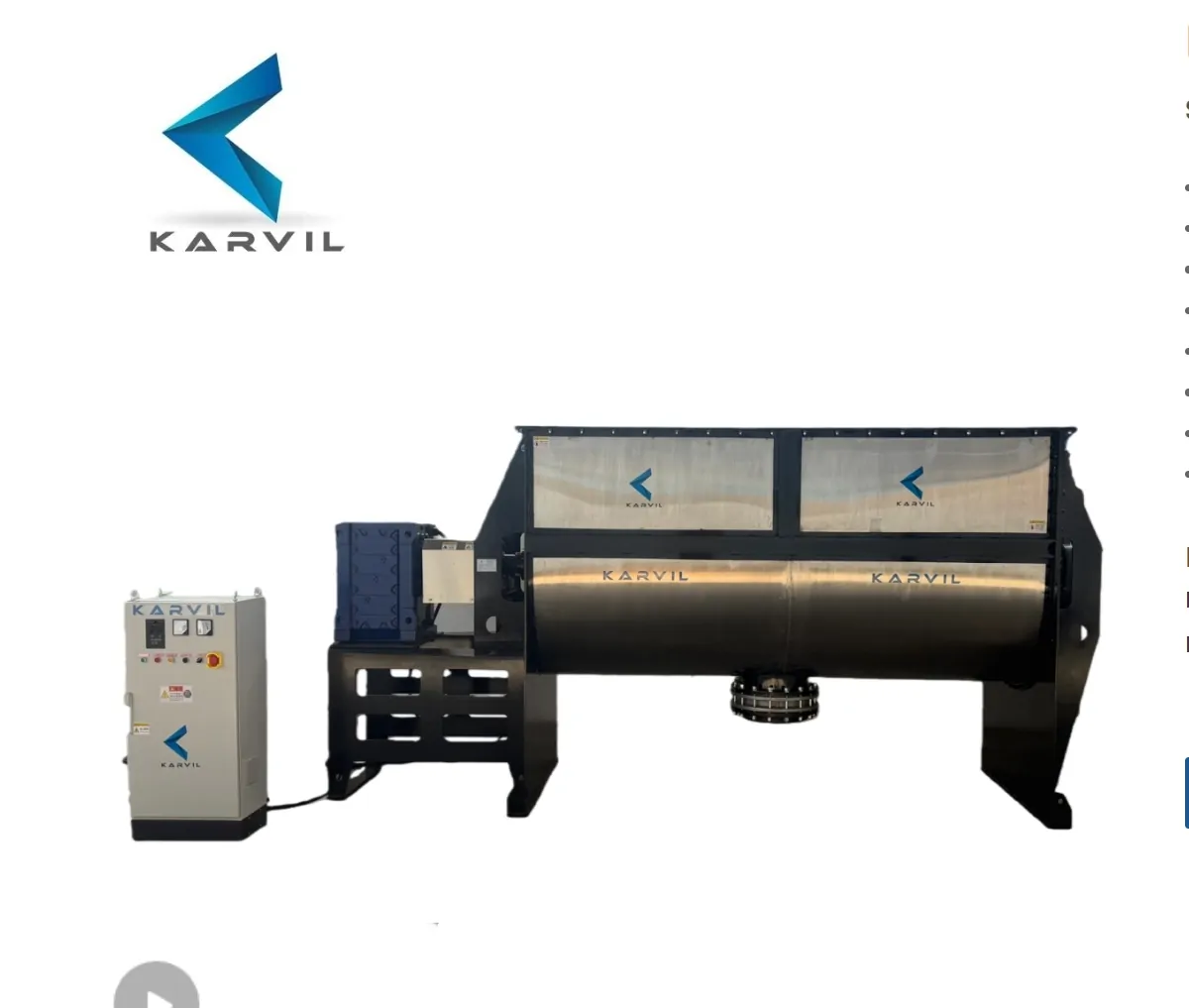

Hitting that 99% mixing uniformity mark is way more than just a random target; it is a total must if you want to keep your product quality high and your brand name clean. In the world of super-accurate powder mixing, even a tiny mistake can cause big trouble. Whether you are tossing together baby formula, mixing up chemical stuff, or making strong building materials, the way your final mix turns out determines if your product actually works. This guide dives deep into the mechanical bits and the smart ways you can run your machine to stop ingredients from separating and make sure every single bit of your batch is exactly how it should be.
When you put your money into industrial mixing tools, you are picking a teammate for your factory's success. Karvil is a top-tier global maker that focuses on high-power mixing, grinding, and spreading tools. With many years of hands-on building experience, the team there has truly mastered the way liquids and powders move and how materials behave. Their Horizontal Ribbon Mixer Machine is a perfect example of this hard work, offering a super tough build and perfectly planned agitators that solve even the most annoying mixing headaches. From high-tech rocket fuel to simple food powders, people in over 50 countries trust their gear because it stays running, keeps workers safe, and follows strict clean rules. When you pick their machines, you aren't just buying metal; you are getting a history of being the best and a help team that really cares about keeping your work going.
The amount of stuff you pour into your tank is probably the most important thing that decides how good your mix will be. A lot of workers think that filling a machine right to the very brim will make them more productive, but honestly, that just ruins the moving flow that you need to get everything blended perfectly.
To get that perfect 99% mix, you have to keep your fill level between 40% and 60% of what the tank can hold. People usually call this the "working capacity." When you stay inside these lines, the top part of the outer ribbon stays visible or is just barely covered, which lets the powder tumble and fall around freely.This creates what experts call a 'fluidized bed,' where particles have enough air and space to swap places.
If you put too much in, the stuff at the very top just sits there. It stays out of reach of the spinning blades, which means it never gets into the fast-moving zone. On the flip side, if you don't put enough in—like less than 20%—the ribbons can't grab enough material to push it back and forth across the machine. By following the 40%-60% rule every single time, you make sure that the Horizontal Ribbon Blender Mixer for Powder Mixing can do its two-way flow job, pulling bits from the sides to the middle and back again in a smooth, never-ending circle.

You also need to remember that different powders take up different amounts of room even if they weigh the same. A 500kg pile of heavy sand is way smaller than a 500kg pile of light flour. You should always figure out your fill level by looking at the volume (liters) instead of just the weight (kilograms). This simple step stops "dead zones" from forming where powders might just sink to the bottom and refuse to join the rest of the party.
After you have the volume figured out, you need to look at how the metal parts actually touch the powder. The tiny space between the outer ribbon and the wall of the tank is where many mixing jobs go wrong.
In a lot of basic mixers, a thick layer of powder often just stays at the bottom of the U-shaped tank, never getting touched by the spinning ribbons. This leads to a batch that looks great on top but has unmixed ingredients hiding at the bottom when you open the hatch. To stop this from happening, professional machines are built with very tight spaces. By making the gap between the ribbon edge and the wall super small, the machine physically forces every single grain to move. This is extra important for "sticky" powders or stuff with a bit of moisture that likes to glue itself to the stainless steel.
The way the inside parts are built is what really pushes that 99% uniformity. A high-quality setup uses two sets of ribbons working together. The outer one pushes stuff toward the middle opening, while the inner one pushes it back toward the flat ends of the tank. This back-and-forth movement creates a really busy mixing environment where shear and convection meet. This motion makes sure that even if you are mixing things that are very different—like tiny vitamins and big grain chunks—the pieces are forced to blend together instead of just staying in their own layers.
Being fast isn't the only goal; you have to be smart about time too. Some people think that if you let a mixer run longer, it will get even better. But actually, mixing for too long is a common reason why batches fail.
Every mix has a perfect "sweet spot." Once you hit that peak 99% uniformity, keeping the motor running can actually start to pull the mix apart again. This happens because the shaking energy makes smaller, heavier bits sink to the bottom while the light stuff floats up. To avoid this, you should take small samples at 3, 5, 8, and 12 minutes when you first start a new product. You will probably see that a well-made machine hits total perfection in just 5 to 15 minutes.
Running the mixer too long also makes things get hot because of the rubbing. For things that are sensitive to heat—like some plastics or food powders with lots of fat—this can cause ugly clumps or even melting. By finding the best time to stop, you keep your ingredients in good shape while getting as much work done as possible every hour.
In a modern factory, how well a machine works is just as important as how safe it is. You need tools that look out for your workers just as much as they look out for your product quality.
The way a great mixer is built has to put safety first. This means having sensors on the lid that instantly cut the power if someone opens it while it's running. Every moving part, like the chains and belts, should be totally covered up so no one can accidentally touch them. Also, if you are working with powders that could catch fire or explode, the gear needs to have special ATEX and CE certificates. This proves the machine won't throw a spark in a room full of dust.
For people making food or medicine, what the machine is made of is a huge deal. To be sure your product is safe to eat, the parts that touch the food must be high-grade stainless steel that has been tested hard. Good machines follow the (EC) No.1935/2004 rules, which say the metal and seals won't leak bad stuff into your food. The inside of the tank should be polished until it's as smooth as a mirror. This stops germs from growing in tiny scratches and makes cleaning between different batches quick and easy.
The fact that these mixers are used in so many different jobs shows how good they are. If a company has worked in many different fields, you know their machines can handle almost anything.
Whether you are in America or Europe, you can find these mixers doing very important work. In the space world, they mix the exact parts needed for rocket fuel. In the chemical world, they handle everything from powerful explosives to thick glues and sealants.
In the food world, the list is huge. You can see these machines mixing big piles of flour, ice cream powders, or the stuff used to make protein bars. Because you can change the ribbon shape, the motor power, and the exit valves, the machine can be built to fit exactly what you need, whether your powder is as light as a feather or as heavy as wet cement.
Your friendship with the people who make your machine shouldn't end the day the truck drops it off. Doing well in the long run depends on the help you get after the sale.
A good company gives you a one-year warranty on all the parts to keep your money safe. But the real prize is getting technical advice for as long as you own the machine. If you run into a new problem with a weird powder five years from now, you should be able to call up professional engineers who can help you over the phone or computer to fix your process.
To help your repair team, every machine should come with a big, easy-to-read English manual and clear wiring drawings. This makes it easy for your own workers to do basic check-ups. If something really tricky happens with the electronics, having remote support from the maker's engineers means your factory won't be stuck doing nothing. This promise to help is what makes a company more than just a seller—it makes them a real partner in your business.
Q: Can I use this mixer for wet pastes or gooey stuff?
A: These are mostly for dry powders. You can spray a little bit of liquid in to coat the powder, but if you have thick, sticky paste, you probably need a different machine like a sigma mixer. Those have more power and special blades for heavy, wet work.
Q: How do I know if the gap between the blade and the wall is too big?
A: If you finish a batch and find a layer of powder at the bottom that didn't change color or mix in at all, your gap is likely too wide. High-quality mixers let you adjust these spaces so the blade can sweep the whole tank clean.
Q: Is it hard to clean the machine when I switch products?
A: It's pretty easy if the machine is built right. Good mixers have very smooth surfaces and no sharp corners where powder can hide. Using stainless steel that follows (EC) No.1935/2004 rules means you can use strong cleaners without hurting the metal, making the switch to a new recipe safe and fast.


