Views: 41 Author: Site Editor Publish Time: 2025-01-24 Origin: Site
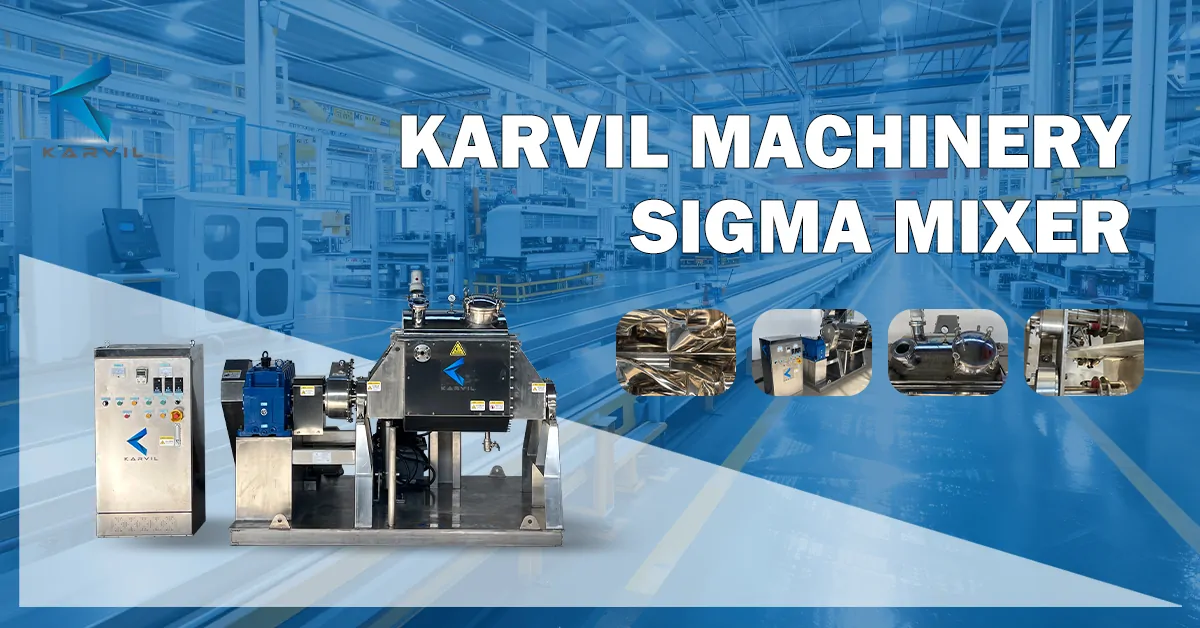
The principle of the Sigma mixer is to use the unique simga blade shape and the multiple forces generated by relative motion to achieve efficient mixing of materials, as follows
The Sigma mixer has a pair of or Z-shaped blades that cooperate with each other. When the motor drives the blade to rotate, the blade will cut into the material. Due to the speed difference between the blade and the material, a shear force will be generated on the material, just like cutting the material with scissors, cutting large material clumps or blocks into smaller parts. At the same time, the blade will stretch the material during the rotation process, causing the material to deform in different directions, increasing the contact area and mixing degree between the materials.

The two blades usually rotate at different speeds, with a common speed ratio of 3:2 or other specific ratios. This speed difference causes the material to form flow differences between different areas during the process of being pushed by the blade. The material is brought from one blade area to another blade area, and is constantly folded and turned over in the process, just like folding and spreading the dough when kneading it, so that materials of different properties and different positions can be fully mixed with each other, so as to achieve the effect of uniform mixing.
There is a certain gap between the blade and the tank wall and the blade of the mixing tank. The material will be squeezed and kneaded in these gaps under the push of the blade. The material is squeezed in a small space by the dual action of the blade and the tank wall, and further crushed and mixed. This extrusion and kneading effect is particularly important for high-viscosity and elastic materials, which can better adjust and integrate the molecular structure inside the material and improve the quality of mixing.

Under the stirring of the blade, the material forms an overall circulation flow in the mixing tank. The material pushed from the vicinity of the blade will flow to other areas of the mixing tank, and then will be brought back to the blade action area by other blades or flowing materials, forming a continuous circulation flow process. This circulation flow enables the materials to be fully exchanged and mixed in the entire mixing tank, avoiding local uneven mixing and ensuring that all materials are evenly stirred.
More Information
info@karvil.com
https://www.karvil.com/


