Views: 112 Author: Site Editor Publish Time: 2025-12-18 Origin: Site


Industrial mixing of high-viscosity materials demands not just strong machines but also a solid grasp of how shear force, energy use, and machine design affect product quality. From adhesives to battery pastes, picking the correct mixer helps you reach even blending and steady process results. Whether you handle thick rubber mixes or delicate emulsions, this guide will assist you in deciding if a sigma mixer or a planetary mixer fits your needs best.
If you seek equipment options supported by solid engineering knowledge and real-world industry uses, Karvil stands out. As a reliable maker of industrial mixing gear, Karvil delivers custom setups for tough mixing conditions. Their range includes planetary mixers for cosmetics and pharmaceuticals, plus sigma mixers with extruders for heavy kneading jobs. With a strong research and development group and a focus on improving processes, Karvil gives more than equipment—they provide ongoing production help matched to your requirements.
High-viscosity materials show strong resistance to flow, so they need major mechanical effort to blend smoothly. Items with viscosities above 10,000 cps—such as rubber-based adhesives, sealants, silicone mixes, or heavy doughs—create issues like dead areas, uneven spread, and heat accumulation. Viscous materials fight flow and demand plenty of power to shift or stir. They can get very thick, starting from 10,000 up to more than a million cps.
The chief technical issues when handling these materials involve supplying solid shear force for evenness, managing temperature to prevent heat damage, and making sure of full unloading to cut down on waste.
To deal with thick pastes or semi-solids well, torque turns into a key factor. The mixer has to apply enough push to beat internal pushback without harming the material. Energy savings matter too—long run times can raise expenses and slow down output.
The role of the mixing setup is clear. It ties straight to the speed, product standard, and safety in chemical making processes. Good mixing systems also stop uneven hot or cold spots that might harm batch steadiness.
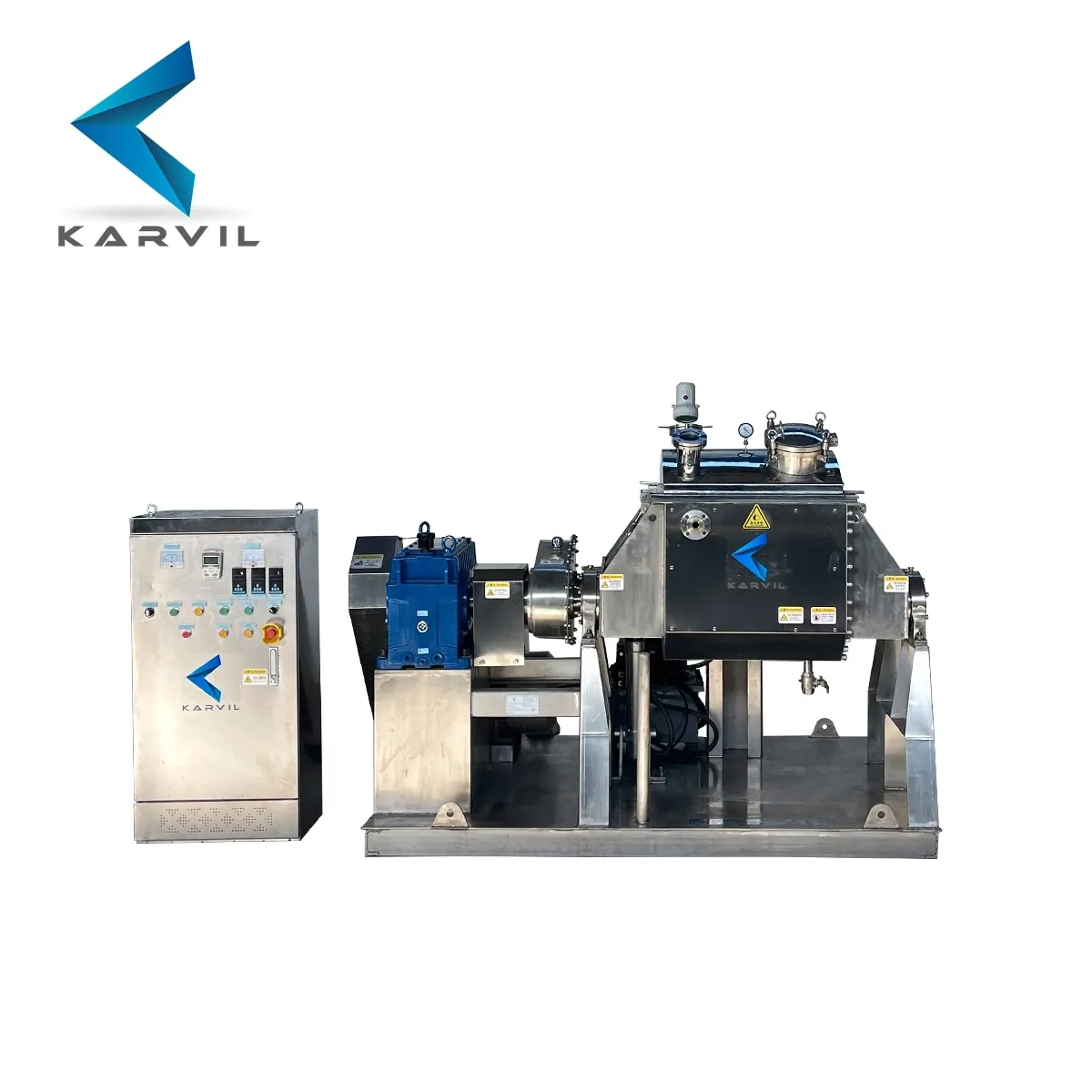
The sigma mixer—also called the Z blade mixer—gets made for hard materials. Sigma mixer is also known as the z blade mixer or sigma kneader mixer, which is used for kneading, and mixing of high-viscosity materials. Its main part is the pair of Z-shaped blades that turn in a flat chamber, making strong cutting and folding effects.
A usual upgrade adds a jacketed build for warming or chilling, which lets you keep tight temperature watch during blending. When linked with a screw unloading tool, it gives smooth and automatic clearing of high-viscosity blends.
This mixer works great for super dense pastes like sealants or carbon mixes because of its strong torque power. The Karvil sigma blade mixer uses a pair of matching and turning Z blades to create a solid cutting action, so viscous materials can respond fast and get even blending.
Its overlapping blades make sure of full kneading, while the screw unloading setup skips hand scraping—this cuts work effort and lowers leftover product. Jacketed choices exist for steam or electric warming and chilling.
This kind of mixer does well in fields where hard kneading matters—such as mixing silicone rubber, making sealants, producing putty, and even candy work. Sigma mixer is employed across diverse industries, including chemical, pharmaceuticals and food, due to its ability to effectively mix materials with high viscosities such as silicone rubber, adhesive, graphite and chewing gum.
In chemical plants, it handles sticky compounds that other tools struggle with, ensuring batches come out uniform without lumps. For pharmaceuticals, the controlled setup helps keep material purity high, avoiding contamination risks during long mix times. Food makers use it for doughs or gums that need deep working to reach the right texture, and it scales from small test runs to full production lines without losing its edge.
Planetary mixers run with both spinning and circling motion. Their blending tools turn on their own centers while also circling the container's middle. This builds a three-dimensional mixing effect, perfect for medium-to-high viscosity items like creams or gels.
The planetary mixer is a high-efficiency mixing equipment integrating dispersion and mixing. It is equipped with a low-speed stirring component and a high-speed dispersing component.
This mixer has multi-shaft setups that hold spreader blades, low-speed stirrers, and wall cleaners. Its upright tank build backs vacuum work—an key for results without bubbles in cosmetics and pharmaceuticals.
Speed handling is exact and settable. The stirring paddle also rotates during revolution, making the material move up, down and around, thereby achieving the ideal mixing effect in a shorter time.

Planetary mixers adjust well: they manage recipe shifts easily and fit multiple steps (like adding solids to liquids or liquids to pastes). Their vacuum feature stops air from getting trapped, while the cleaning system prevents buildup on tank sides—making sure no blind areas.
These mixers shine in settings where even spread matters most, like creating smooth lotions or pastes that must stay stable over time. Operators find them user-friendly, with controls that let you tweak settings on the fly without stopping the process.
Sigma mixers stand out in raw-power kneading; their double Z blades make sharp shear perfect for rubbery or clingy compounds. On the other hand, planetary mixers use circling motion for steady spread across the whole container space—great for emulsions or cosmetic creams.
The sigma mixer is suitable for processing high-viscosity, semi-solid, and rubber materials, and its structure is designed for strong shear mixing. This setup pulls materials from all angles, breaking down clumps faster than many alternatives, which leads to batches that meet strict quality checks every time.
Sigma mixers often use more power because of their heavy torque needs, but they handle thick loads quicker. Planetary mixers save energy better when dealing with mixes that call for detailed spread over longer periods.
Upkeep differs: planetary mixers have extra moving pieces but face less strain on torque parts. Sigma mixers might need tougher supports but have fewer total components overall. In daily runs, this balance helps keep costs down, especially in busy factories where downtime hurts profits.
Screw unloading in sigma mixers makes pulling out sticky clumps easy without hand work. Their flat chamber gives better reach for washing. Planetary mixers are upright setups—washing might take more steps based on tool type, but they score high on cleanliness in vacuum versions.
Both types support quick batch switches, but sigma's design cuts residue to near zero, saving materials and time. Planetary units, with their scrapers, keep walls spotless, which proves vital in clean-room environments like drug making.
Sigma mixers do best in heat-formable uses or when working rubber mixes that need firm kneading. Jacketed builds let you manage warming or chilling closely.
Planetary mixers fit emulsions, multi-step systems, or heat-sensitive goods like salves or battery slurries—above all when vacuum work is a must. Their flexible shafts allow adding ingredients mid-mix, which boosts versatility for research labs or varied production schedules.
If you work with materials over 500,000 cps (e.g., silicone putty), pick a sigma mixer. For 50,000–300,000 cps (e.g., creams), choose planetary types.
Understanding your material's flow behavior helps avoid underpowered equipment that drags out jobs or overkill machines that waste energy. Testing small samples can confirm the right choice early.
Sigma mixers grow well from lab scale to factory size without dropping performance. Planetary mixers are adaptable but might need bigger engines at large scales because of the circling action.
For small runs, both work fine, but sigma holds its kneading power as sizes increase, making it a go-to for expanding operations.
Both choices offer vacuum options and jacketed chambers—but planetary mixers handle air removal better; sigma mixers give stronger heat shift through wide contact areas.
Pick based on if your process fights bubbles or needs even heating to keep reactions steady.
If your work includes lots of recipe switches or wash cycles, planetary mixers might provide superior cleanliness thanks to upright builds and fewer hidden spots.
This factor weighs heavy in fast-paced lines where switching products daily is the norm.
Go for this if you face ultra-high viscosity pastes or doughs that demand solid shearing forces in kneading—and you want a smooth screw unloading tool to shrink product loss between runs.
It's a solid pick for steady, heavy-duty tasks where reliability trumps speed.
Select this when you form multi-phase systems like battery slurries or blended cosmetic bases where even spread and vacuum work are essential.
Its motion ensures no weak points in the mix, ideal for quality-focused outputs.
Each process varies—Karvil supplies fitted blade shapes, engine setups, jacket types (steam/electric/oil), and vacuum tools based on your material traits.
The company provides professional customized services, from agitator selection to system layout, fully considering the process requirements, material characteristics and production environment. This approach means your mixer fits like a glove, boosting output from day one.
From setup help to worker training and lasting process tweaks, Karvil backs your buy past the sale. Test runs are open for checking ideas before full commit.
Their team stays involved, offering tips to fine-tune operations as your needs evolve, which saves time and cuts errors long-term.
Check their main site Karvil to see details or ask for sample tests. You can also contact by email or phone for custom advice.
Q: Which mixer is better for adhesives?
A: If your adhesive has very high viscosity (>500,000 cps), go with a sigma mixer. For medium viscosity emulsified adhesives, planetary mixers offer better dispersion.
Q: Can I use a planetary mixer for rubber compounds?
A: Not recommended—rubber compounds need intense shear force; sigma mixers provide the torque necessary for proper kneading.
Q: How do I know what motor capacity I need?
A: Motor capacity depends on batch size and material viscosity. Karvil provides engineering consultation to help you match motor specs with process demands.


