Views: 30 Author: Site Editor Publish Time: 2026-04-24 Origin: Site
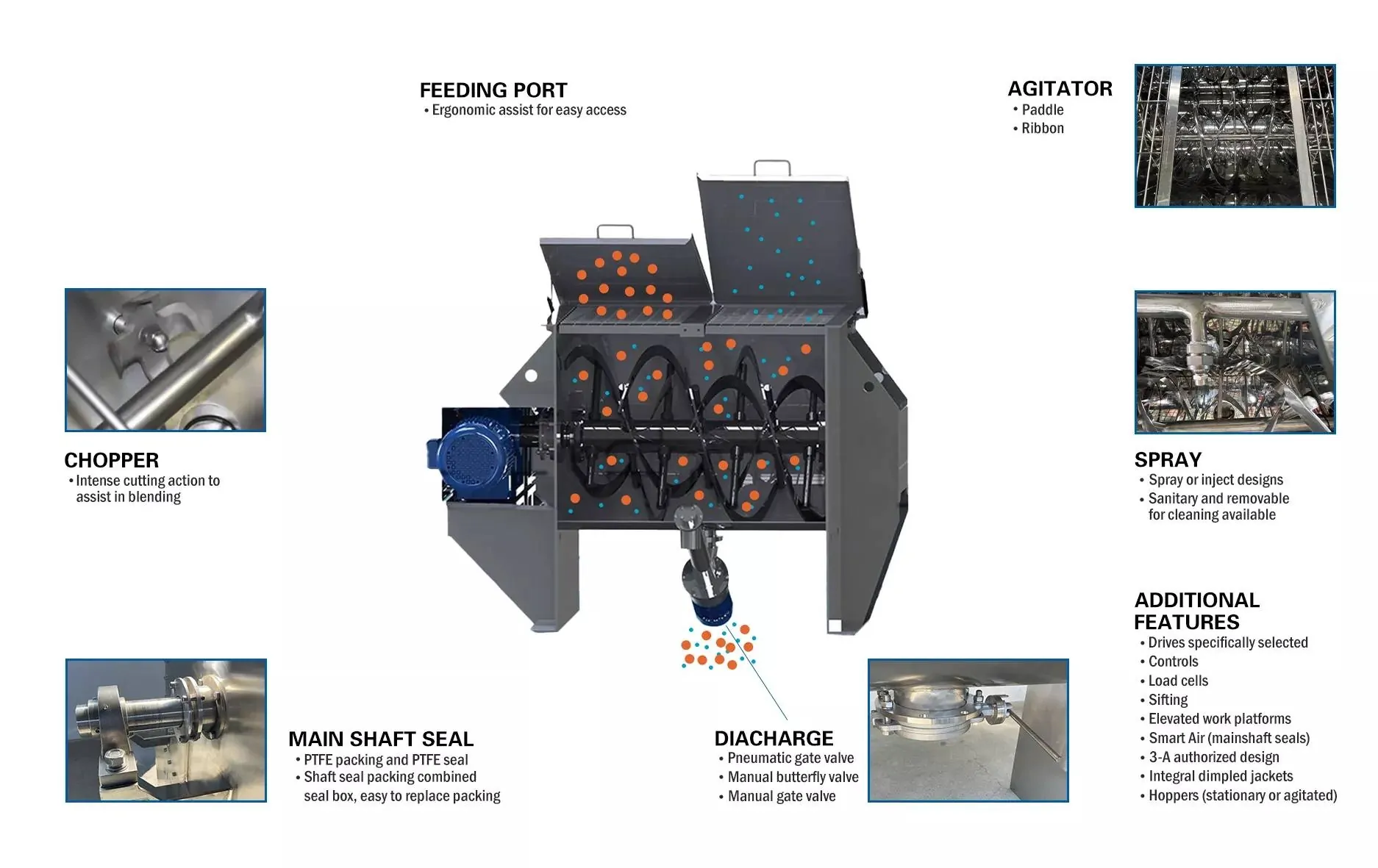
Finding unmixed powder at the bottom of your mixer is a common manufacturing headache. In this post, we explain the mechanical reasons behind mixing dead zones and how Karvil designs ribbon blenders to eliminate them.
If you have ever looked inside a standard horizontal mixer after a batch is finished, you might have noticed a frustrating problem: unmixed raw materials sitting in the bottom corners or around the discharge valve.
In industries where formula accuracy is critical—like food additives, pharma, or complex chemicals—even a small dead zone means the entire batch could fail quality control.
At Karvil Machinery, we’ve seen many clients struggle with this issue before switching to our equipment. Here is the truth: mixing dead zones aren't an operator error; they are an equipment design flaw.
Here is how our engineering team builds Horizontal Mixers to solve this specific problem:
1. The Gap Matters: Precision Clearances
The most common place for dead zones is the space between the mixing blade and the bottom of the U-shaped tank. If the gap is too large, the ribbon simply passes over the material at the bottom.
Instead of standard welding, Karvil relies on high-precision machining for our mixing shafts and tanks. We strictly control the clearance between the outer ribbon and the tank wall to just a few millimeters. This ensures the blade actively sweeps the bottom with every rotation, leaving nowhere for powders to hide.
2. The Bottom Discharge Valve: No "Dead Pipes"
Take a look at the discharge outlet on a cheap mixer. Often, it’s just a pipe welded to the bottom. During mixing, powder drops into this pipe, out of reach of the mixing blades, creating a permanent dead zone.
Karvil completely avoids this. We use contour-fitting discharge valves (either pneumatic or manual). When closed, the inner surface of the valve perfectly matches the curved inner wall of the mixing tank. The result? A completely smooth interior with no "pockets" for unmixed material to sit in.
3. True Cross-Flow Ribbon Design
A mixer needs to do more than just push material around; it needs to fold it. Our double-ribbon agitators are built with specific pitch angles based on the material's bulk density. The outer ribbon constantly moves material from the ends to the center, while the inner ribbon moves it from the center to the ends. This aggressive cross-flow prevents material from stagnating at the ends of the tank.
The Takeaway:
A good mixer shouldn't require your operators to stop the machine and manually scrape the corners. If you are struggling with inconsistent batches or high material waste, it might be time to look at your mixer's design.
Have a challenging material? Send us a message. The Karvil engineering team is happy to review your process and recommend the right mixing geometry for your needs.
[Contact Our Engineering Team / See Our Ribbon Blenders in Action]


