Views: 21 Author: Site Editor Publish Time: 2025-12-04 Origin: Site
If you are working with Polyester BMC (Bulk Moulding Compound) or DMC, you know the struggle. The material is heavy, incredibly sticky, and tricky to mix.
The biggest headache? Glass fibres.
You need strong shear force to mix the resin and filler paste, but if the blades run too fast or too hard once the fibre is added, you end up shredding it. The result is a weak final product and a lot of wasted material.
At Karvil Machinery, we have spent over 20 years studying these problems. We recently customized a 300L Sigma Kneader (Model NH-300) for a UK client facing exactly these issues. Here is why this machine works for them—and why it will work for you.
Standard mixers often run at a fixed speed. That doesn't work well for composites.
Our K300 uses a Frequency Inverter to give you full control over the Z-blades:
Fast Blade: Adjustable 0-37 rpm
Slow Blade: Adjustable 0-22 rpm
The practical benefit: You can ramp up the speed to mix the resin paste quickly, then slow it right down to gently fold in the glass fibres. You get a homogenous mix without destroying the fibre length.
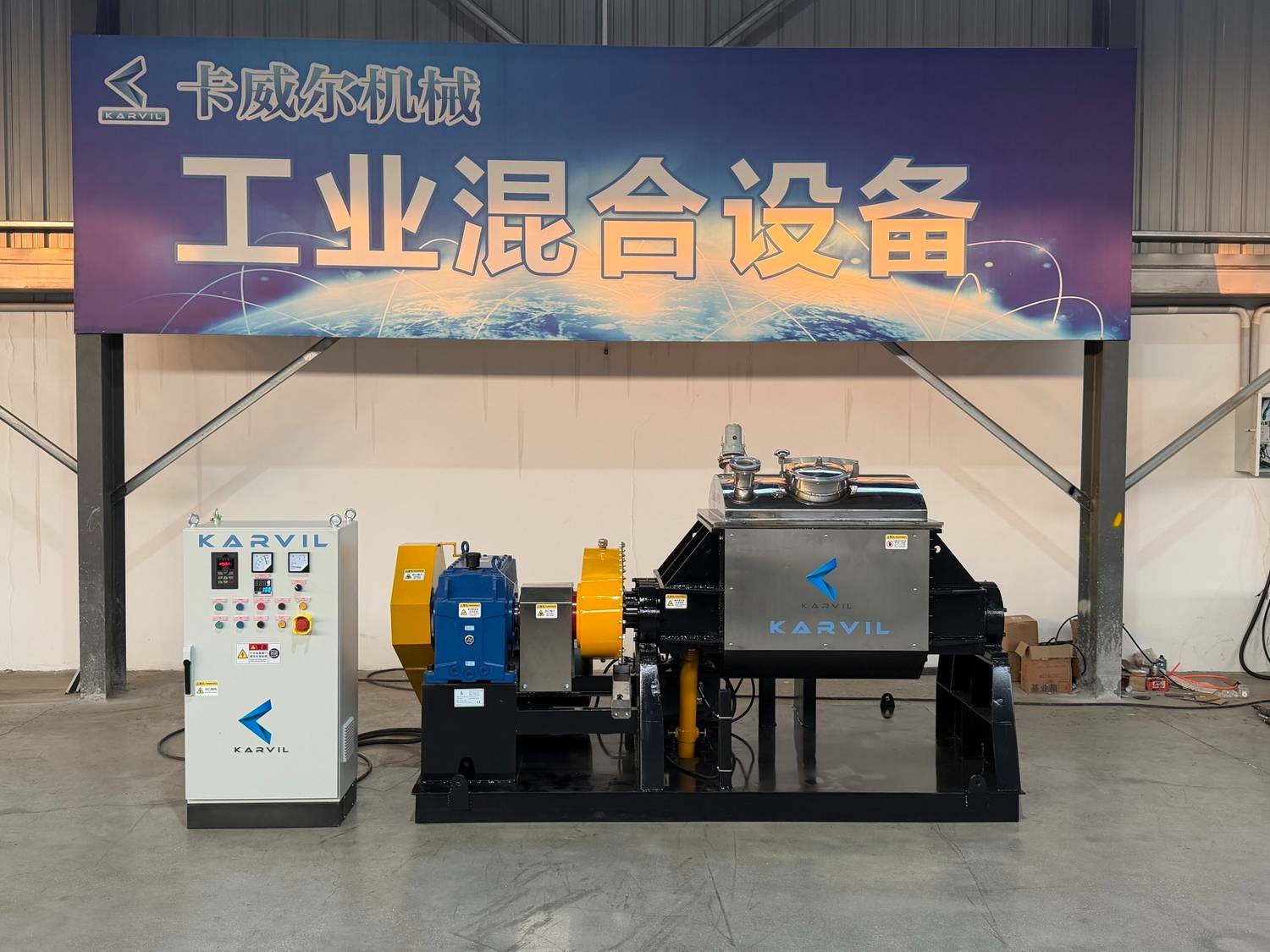
BMC/DMC sticks to everything. Cleaning it out of a rough mixing bowl is a nightmare.
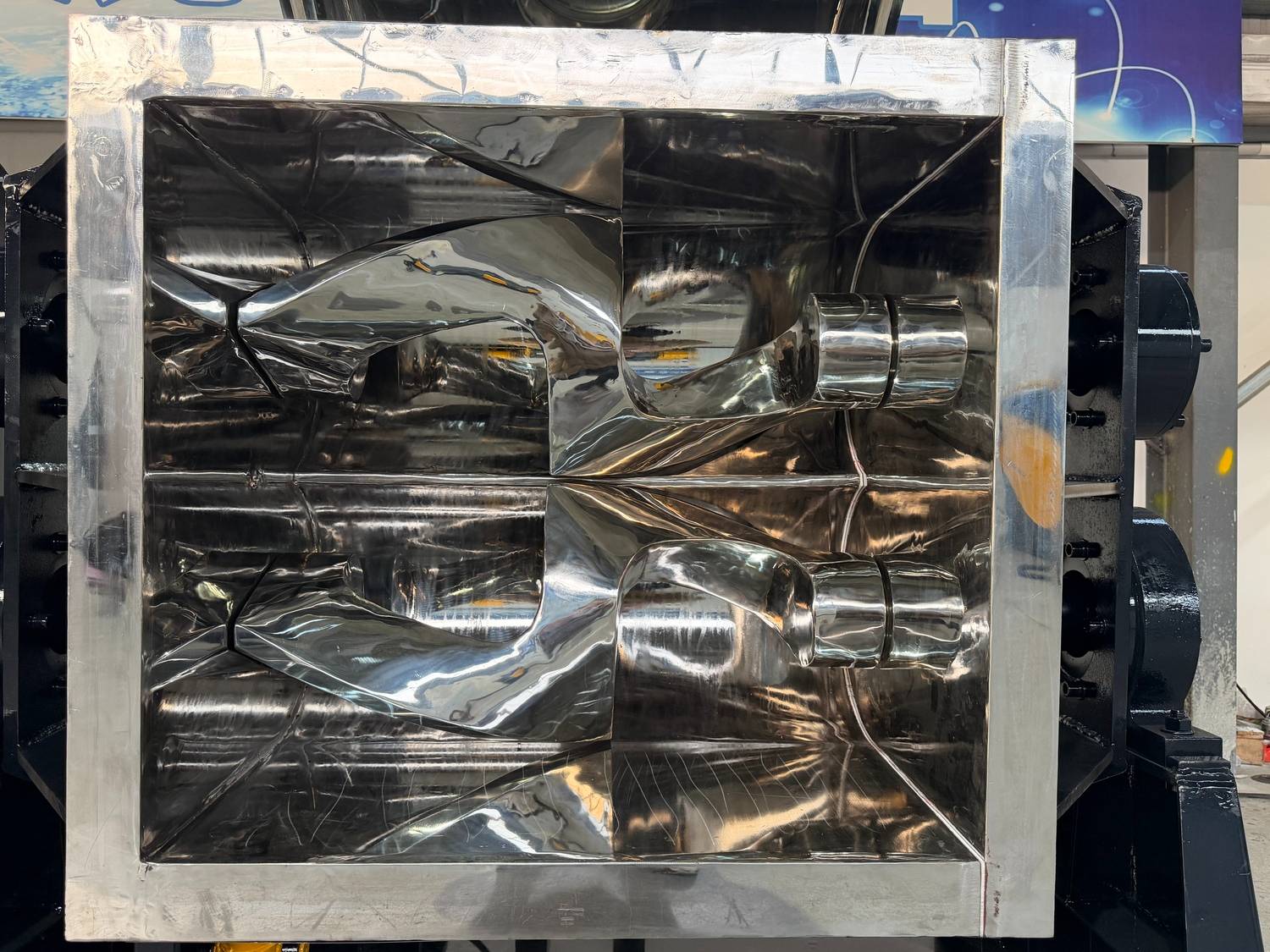
We built this unit with SS304 Stainless Steel for all contact parts, and more importantly, we applied a Mirror Polish.
Why it matters: The smooth surface stops the material from hanging up on the walls. When you use the Hydraulic Tilt to dump the batch, it slides out clean. Less scraping, less downtime.
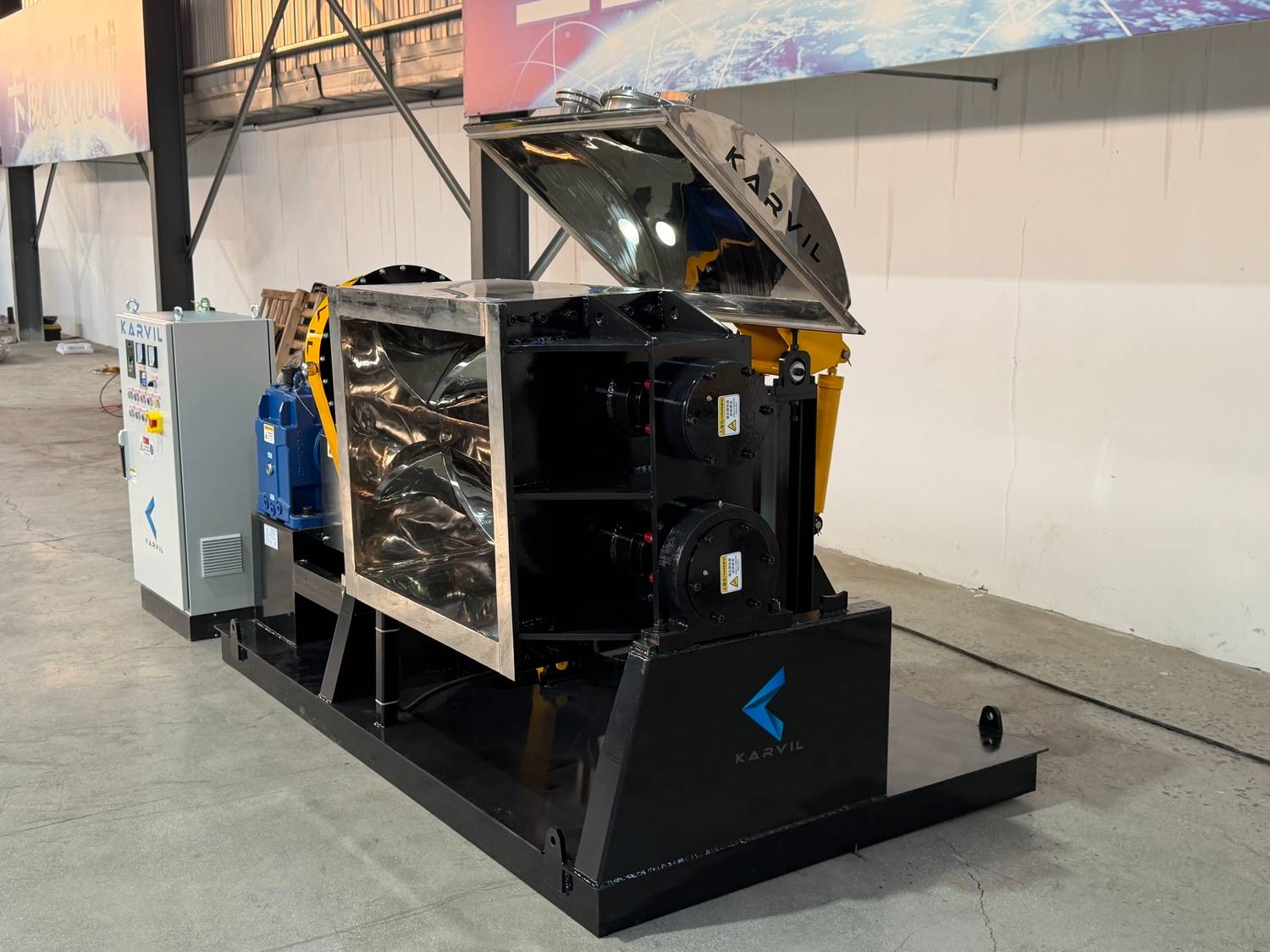
On many older machines, you have to stop the motor and open the lid just to check if the mix is ready. That kills efficiency.
We added two sight glasses on the top lid, and one of them has a built-in LED light. You can clearly see the mixing progress while the machine is running sealed. It’s a simple feature, but our operators love it.
We didn’t cut corners on the drive system. High-viscosity putty puts a massive load on the motor.
This 300L unit runs on a 30kW-4 Pole Siemens Beide Motor. It provides consistent torque. You won’t see this machine stalling halfway through a dense batch.
Total/Effective Volume: 300 Litres / 210 Litres
Motor: 30kW Siemens Beide
Blades: Double Sigma (Z-Type) with Mirror Polish
Discharge: Hydraulic Tilting
Voltage: Customizable (e.g., 415V for UK)
You don’t need a fancy description; you need a mixer that lasts and gets the recipe right. We’ve been building kneaders for two decades, and we know how to handle dense chemical materials.
Got a specific material or voltage requirement?
Drop us an email. Let’s talk about your production line.
[Contact Karvil Machinery]
info@karvil.com


