Views: 712 Author: Site Editor Publish Time: 2024-08-16 Origin: Site
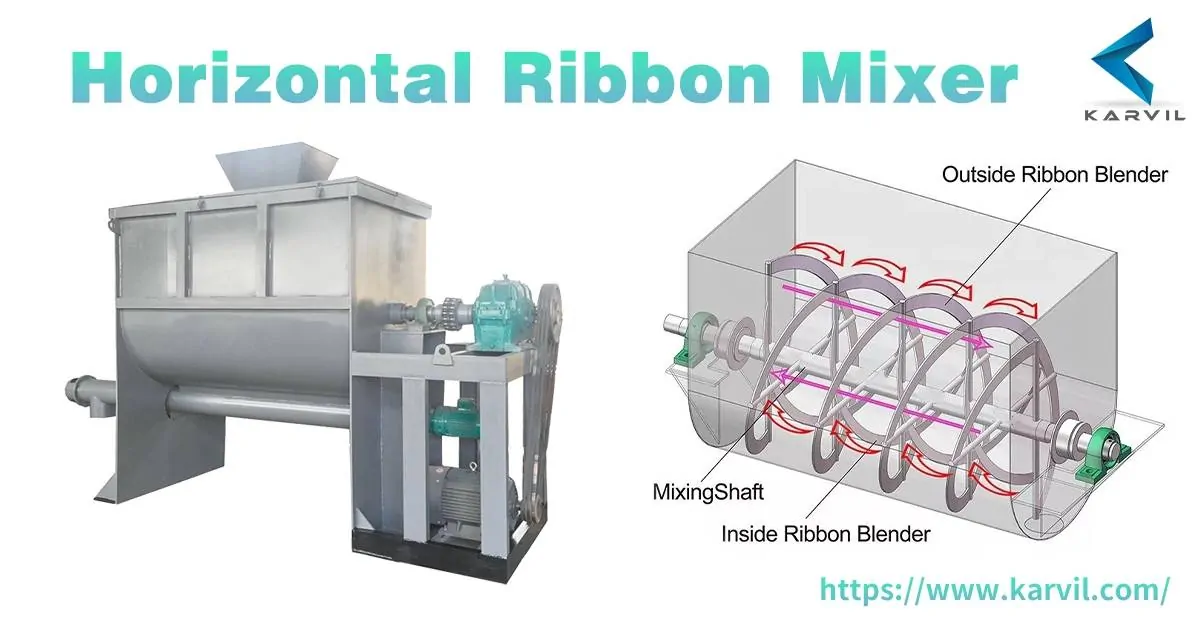
Ribbon mixer (also known as ribbon blender) is a common industrial mixing machine, often used in industries like food processing, pharmaceuticals, chemicals, and more. Karvil Machinery, a known manufacturer, produces variations, but a ribbon mixer's fundamental working principle remains consistent across models.
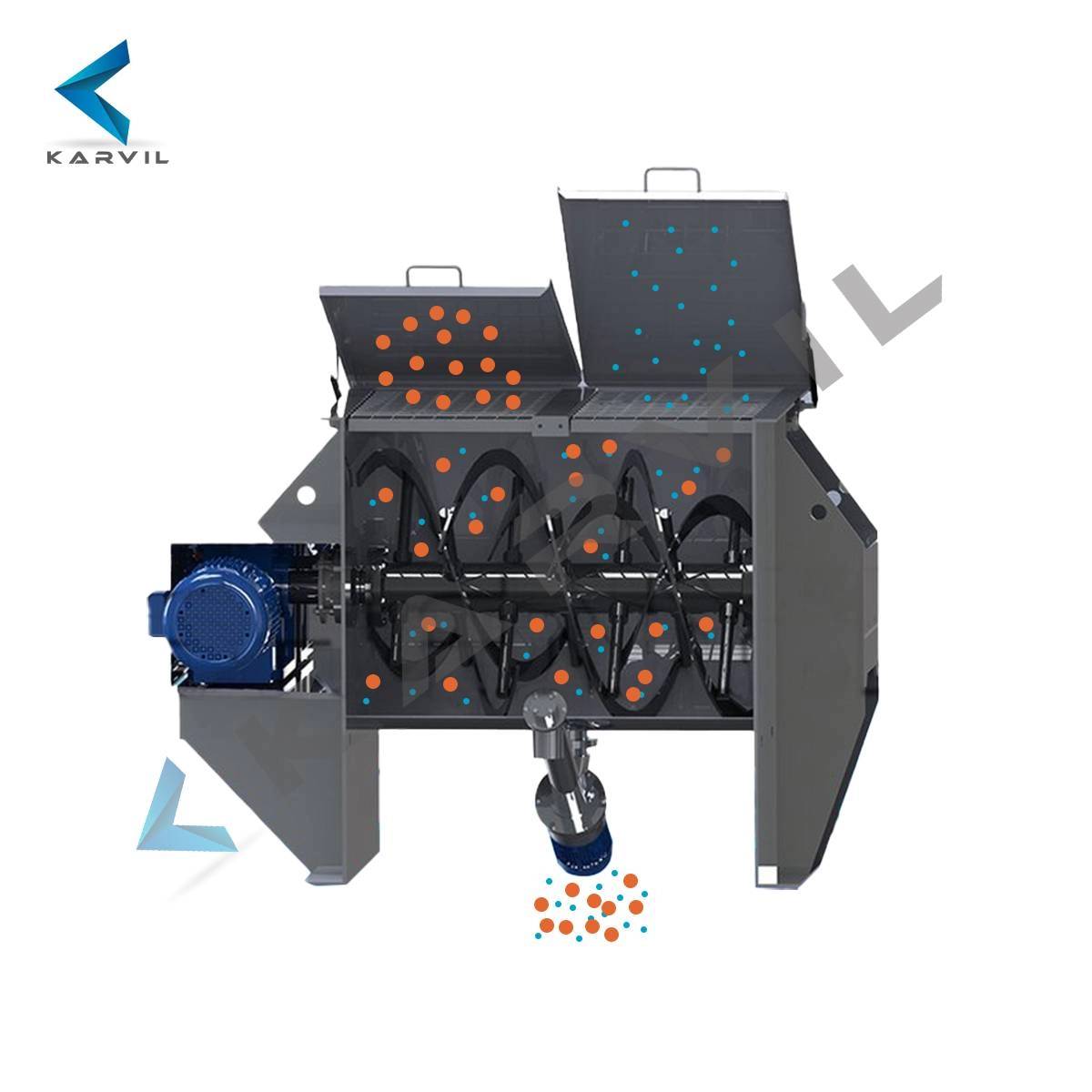
The ribbon mixer consists of a U-shaped horizontal trough containing a central shaft with a set of inner and outer helical ribbons attached. These ribbons are designed in a way that one ribbon moves the material in one direction while the other ribbon moves it in the opposite direction.
When the mixer is powered on, the shaft rotates, causing the ribbons to move the materials within the trough. The counter-current movement of the ribbons ensures thorough mixing by moving the material horizontally, laterally, and radially. The outer ribbon moves the material from the ends of the trough toward the center, while the inner ribbon moves the material from the center toward the ends.
Screw Conveyor Loading: First, the dry or semi-dry materials are loaded into the mixer trough via a screw conveyor. Depending on the model, loading can be done manually or by an automated system.
Convective Mixing: The rotating ribbons create a convective movement where the material is lifted and circulated within the trough.
Shear Mixing: The close clearance between the ribbons and the trough wall creates a shearing action that helps to break up clumps and ensure even mixing.
Discharge: Once the mixing is complete, the material is usually discharged through a valve located at the bottom of the trough. The ribbon's rotation helps in emptying the mixer efficiently.
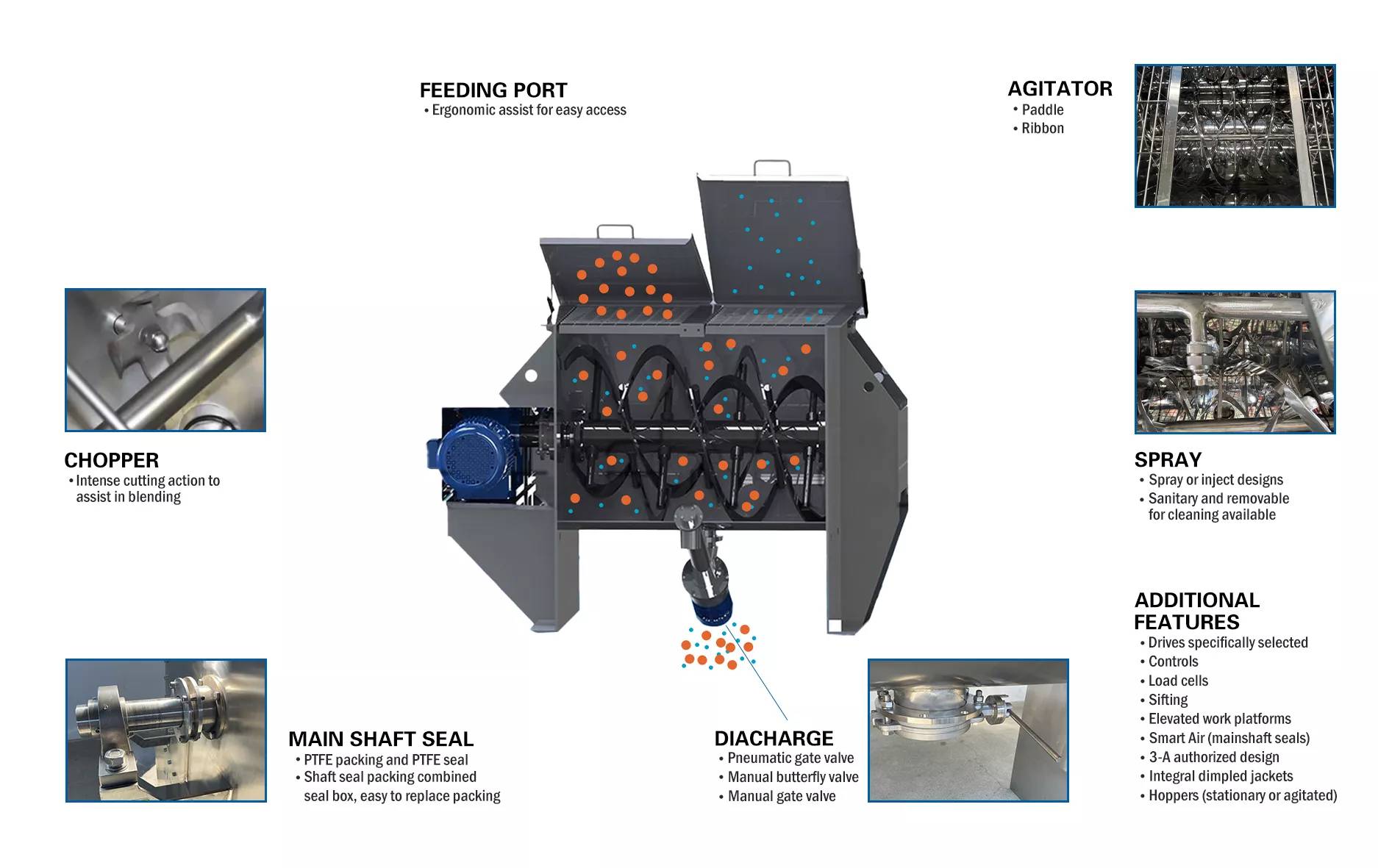
Ribbon mixers are ideal for mixing dry powders, granules, and pastes. They are widely used in food, chemical, pharmaceutical, and construction industries, offering efficient and homogeneous mixing.
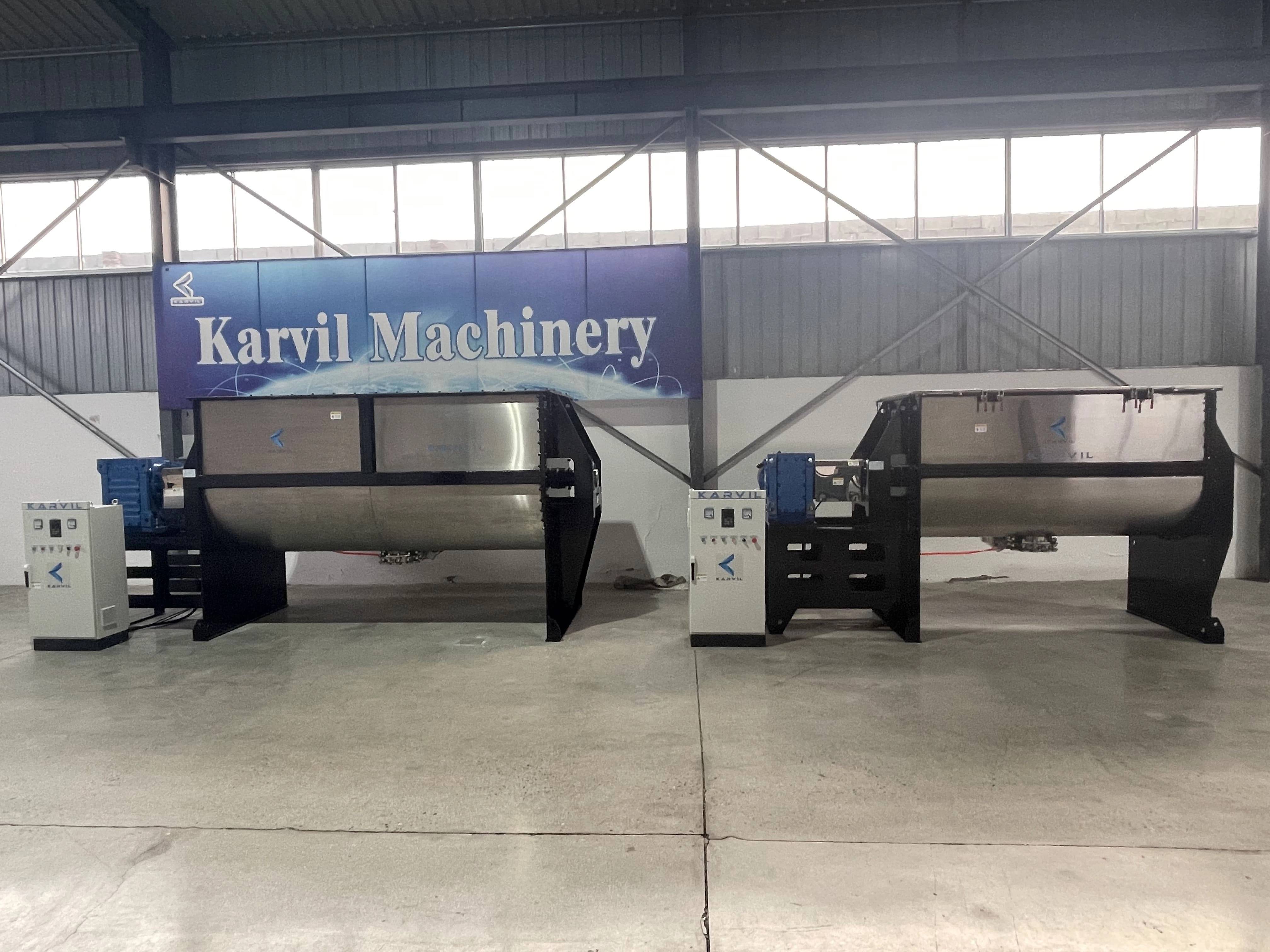
Food Industry: Blending spices, flour, additives, dry ingredients or animal feed.
Pharmaceuticals: Mixing powders for tablets or capsules.
Chemicals: Combining pigments, fertilizers, or detergents.
Construction: Homogenizing cement, gypsum, or dry mortar.
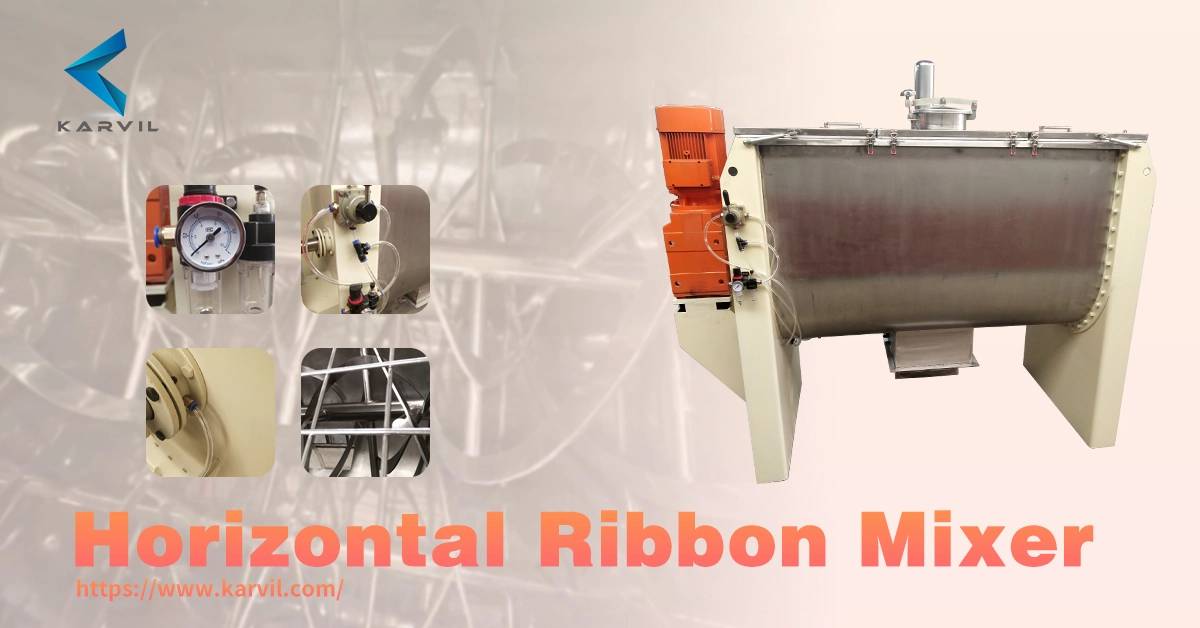
The ribbon mixer working principle revolves around its unique double helix mixer. Whether processing food additives or industrial chemicals, understanding the ribbon mixer’s operation helps manufacturers optimize their workflows and deliver high-quality products.
If you need more specific information about Karvil Machinery's ribbon mixers, such as their features or customizations, you may want to consult info@karvil.com or reach out to https://www.karvil.com/


